
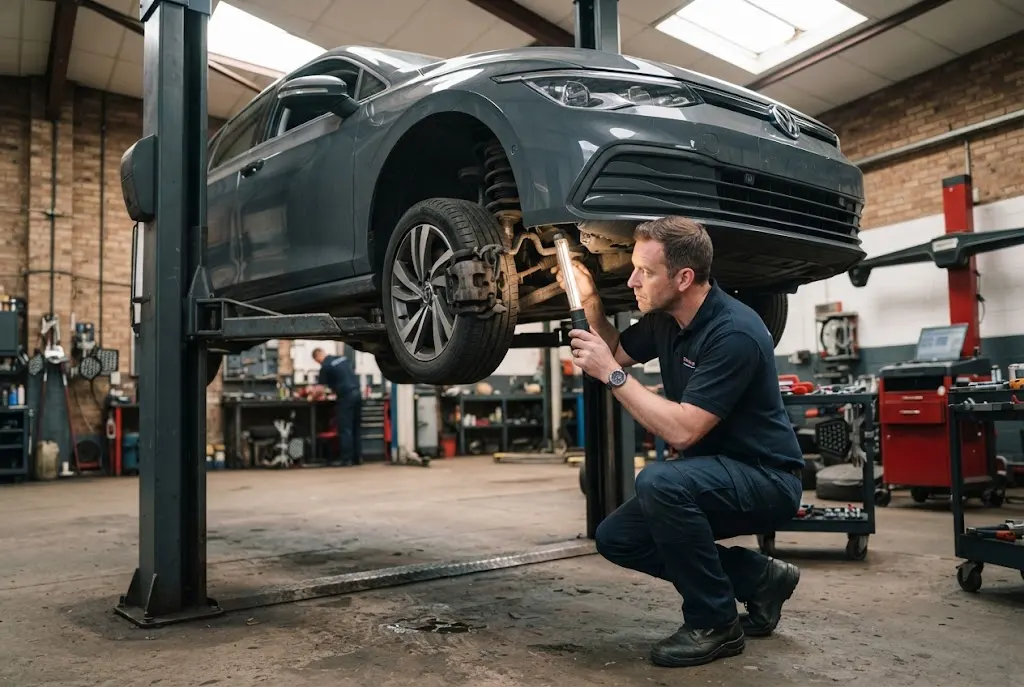
Suspension repair can help address problems affecting a vehicle’s ride, handling, stability and steering behaviour. The suspension system includes several components that work together to support the vehicle and help its wheels maintain appropriate contact with the road. When one or more components become worn or damaged, drivers may notice unusual noises, uneven handling, vibration or changes in ride quality.
Suspension problems can sometimes develop gradually, making them difficult to identify until the symptoms become noticeable. A professional inspection can help establish whether the issue involves the suspension, steering or another part of the vehicle. Understanding these systems also helps automotive businesses create useful content that answers specific customer questions without making every service page compete for the same search terms.
What Does Suspension Repair Involve?
Suspension repair covers the inspection, diagnosis, maintenance and replacement of components within a vehicle’s suspension system. The exact work depends on the vehicle, its design, the condition of its components and the symptoms reported by the driver.
A suspension system can include components such as springs, dampers, control arms, bushes and other parts that contribute to wheel control and vehicle stability. Different vehicles use different suspension designs, so the appropriate repair procedure cannot be determined from a symptom alone.
For this reason, a professional assessment is often the first step. The technician can investigate the reported behaviour and determine which components require closer examination.
Common Signs You May Need Suspension Repair
Drivers may notice several changes when suspension components become worn or damaged. Some symptoms are obvious, while others may initially seem like minor changes in the way the vehicle drives.
Potential signs include:
- Unusual knocking or rattling noises over uneven roads
- Changes in ride comfort
- Excessive bouncing after road imperfections
- Uneven tyre wear
- The vehicle feeling unstable or unusual through corners
- Changes in steering behaviour
- The vehicle appearing to sit unevenly
- Vibration or unusual movement while driving
These symptoms can have multiple causes. A noise, for example, does not automatically prove that one particular suspension component has failed. Proper diagnosis helps distinguish suspension problems from steering, wheel, tyre or other vehicle issues.
Suspension Repair and Steering Repair
Steering repair and suspension work are closely related because both systems contribute to how a vehicle responds to driver inputs and road conditions. However, they are not the same service.
When a customer reports that a vehicle is pulling, wandering or behaving differently while steering, a technician may need to investigate several possible causes. Suspension components, steering components, tyres and wheel alignment can all be relevant depending on the symptoms.
This is why a broad inspection can be more useful than assuming that the first suspected component is responsible.
Why Steering Symptoms Should Not Be Ignored
A noticeable change in steering behaviour deserves attention, particularly if it develops suddenly or is accompanied by unusual noises, vibration or difficulty maintaining the vehicle’s direction.
Drivers should avoid continuing to use a vehicle when a serious steering or handling problem makes driving unsafe. Professional assessment or vehicle recovery may be appropriate depending on the circumstances.
Suspension Replacement: When Is It Necessary?
Suspension replacement may be recommended when a component is worn, damaged or no longer performing as required. Replacement does not necessarily mean that every suspension component needs to be changed at the same time.
The appropriate repair depends on the vehicle and the results of the inspection. A technician may identify a specific failed component while determining that other parts remain serviceable.
Vehicle owners should also consider the condition of related components when a repair is recommended. Suspension systems operate as connected assemblies, so inspecting surrounding parts can help provide a more complete picture of the vehicle’s condition.
What Is Steering Alignment?
Steering alignment is commonly discussed alongside suspension and steering because wheel alignment settings can influence tyre wear, steering behaviour and how a vehicle tracks along the road.
Alignment is not necessarily the solution to every suspension or steering symptom. If a component is damaged or excessively worn, correcting alignment alone may not address the underlying issue.
When appropriate, alignment checks can therefore form part of a broader investigation into handling, tyre wear or steering concerns.
Suspension Maintenance and Preventive Checks
Suspension maintenance can help identify wear or damage before a minor issue develops into a more complicated repair. The appropriate maintenance schedule varies by vehicle, so owners should follow the manufacturer’s recommendations and arrange an inspection when they notice changes in handling or ride quality.
Road conditions can also influence suspension components. Potholes, uneven surfaces and impacts can place additional stress on wheels, tyres, steering and suspension components.
Regular attention does not guarantee that a component will never fail, but it can make it easier to identify developing problems and understand the condition of the vehicle.
How Suspension Problems Can Affect Tyres
Suspension and wheel-related problems can sometimes contribute to unusual or uneven tyre wear. However, tyre wear can have several possible causes, including inflation issues, alignment settings and other vehicle conditions.
When unusual wear appears, it can therefore be useful to investigate the broader vehicle rather than treating the tyre as an isolated problem.
A professional inspection can help determine whether suspension or steering components require attention and whether an alignment check is appropriate.
Suspension Repair and Vehicle Inspection
A customer who notices a suspension symptom may not know whether the issue is mechanical, steering-related or connected to another part of the vehicle. This makes auto inspection services a natural supporting topic within an automotive content cluster.
Inspection content can explain how technicians investigate vehicle symptoms before recommending specific repairs. This is particularly useful for customers who hear a noise or notice unusual handling but do not know which service they need.
Similarly, electrical or starting concerns belong to different service categories. Customers experiencing those issues can find more focused information through auto electrical services and auto battery service.
Building a Suspension and Steering Content Cluster
For automotive websites, a dedicated suspension page can act as part of a broader cluster content strategy. Instead of publishing multiple articles that repeat the same explanation, each page can target a distinct question or service.
The main suspension repair page can focus on commercial service intent. Supporting articles can then address topics such as suspension symptoms, worn components, steering problems, wheel alignment and maintenance.
This structure supports semantic SEO because the website covers related concepts in a logical way while allowing individual pages to remain focused.
Internal links are particularly valuable in this structure. A reader learning about steering symptoms can move to an article specifically about steering repair, while someone investigating a wider vehicle problem can access relevant inspection content.
Using Internal Links Naturally
Internal links should guide visitors towards information that genuinely expands on the subject they are currently reading. They should not be inserted simply to increase the number of links on a page.
For example, someone reading about suspension symptoms may benefit from a dedicated article about steering repair. A customer who is unsure whether a noise is suspension-related may instead benefit from broader diagnostic information.
The same principle applies across the wider automotive cluster. Brake-related questions can lead to brake services, while battery and electrical issues can remain within their respective service areas.
This creates a logical information network where every page has a defined purpose.
How Pillar Pages Support Automotive SEO
Pillar pages provide a broad overview of a major topic and connect readers to more specific resources. A suspension repair page can serve this role when the website has supporting content about steering, alignment, component replacement and maintenance.
The pillar page should not attempt to answer every possible question in exhaustive detail. Instead, it should provide a useful overview and direct readers to deeper resources where appropriate.
This approach can also reduce repetition. Rather than explaining the same steering issue across several pages, a dedicated supporting article can cover the subject in greater depth while the main suspension page provides the relevant contextual link.
Creating Useful Suspension Service Content
High-quality automotive content should focus on what drivers need to know. Technical terminology can be useful, but it should be explained in plain language when it is relevant to the reader.
A useful suspension service page can cover the main symptoms, possible causes, inspection process, common repair categories and reasons for seeking professional assistance. It should also avoid promising that a particular component will be replaced before the vehicle has been assessed.
Supporting informational articles can then target narrower searches. For example, one article can explain suspension noises, another can discuss steering symptoms and another can address wheel alignment. Each resource has a distinct purpose while contributing to the broader topic.
When Should You Arrange an Inspection?
A professional inspection can be appropriate when a vehicle develops a noticeable change in ride, handling, steering or suspension behaviour. This is especially relevant when symptoms are persistent, worsening or accompanied by unusual noises or vibration.
Drivers should also pay attention after significant impacts such as hitting a pothole or kerb. If the vehicle’s handling or steering changes afterwards, an inspection may help determine whether a component has been affected.
The earlier a potential problem is assessed, the easier it can be to understand what has changed and what action may be appropriate.
Final Thoughts on Suspension Repair
Suspension repair can involve anything from investigating unusual handling and noises to replacing worn or damaged components. Steering repair, wheel alignment and suspension maintenance are closely related subjects, but each addresses a different aspect of vehicle operation.
For drivers, recognising changes in ride quality, handling and steering can help identify when professional attention may be appropriate. For automotive websites, these subjects provide opportunities to build a structured content cluster in which each page answers a distinct customer need.
By connecting suspension repair with relevant inspection, steering, braking, battery and electrical resources, a website can create a useful internal information network without relying on repetitive content. A focused pillar page supported by well-defined articles can also strengthen the site’s broader semantic structure and make it easier for visitors to find the information relevant to their vehicle concerns.