
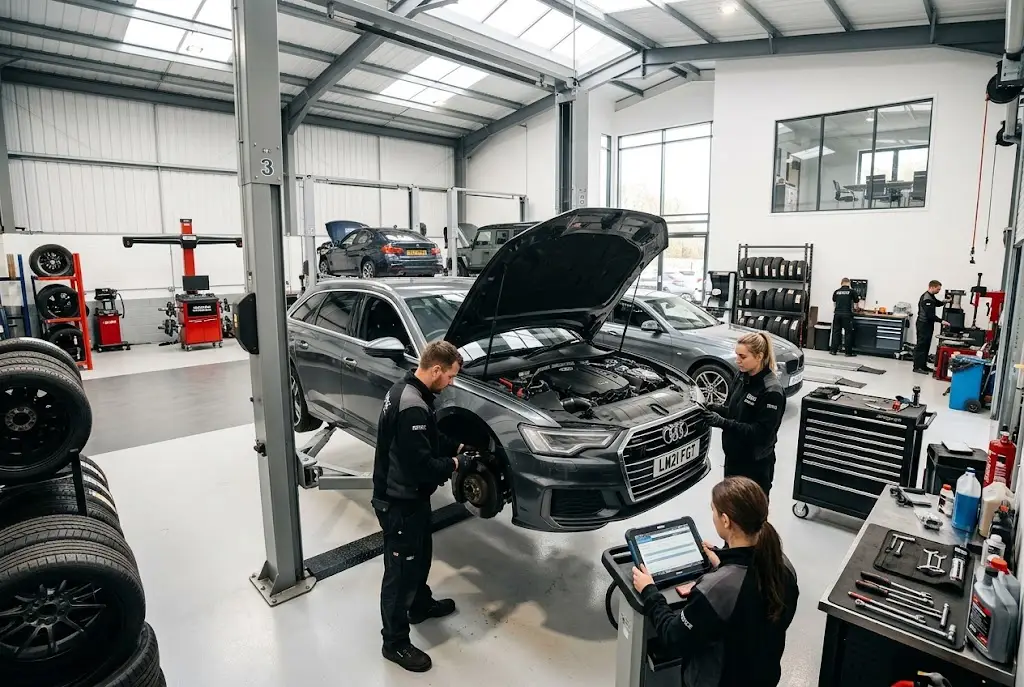
For businesses offering auto services, being visible when motorists search for servicing, repairs, MOTs, tyres or vehicle maintenance can make a major difference to enquiries. However, strong automotive search visibility rarely comes from one page or a handful of keywords. It requires a connected strategy that brings together useful content, service pages, local SEO, internal linking, digital PR and credible link building.
UK garages and automotive service businesses operate in a search environment where customers often have a specific problem to solve. A driver may need a service, notice unusual tyre wear, see a dashboard warning light or discover that an MOT is approaching. Each situation creates a different search journey. A well-structured website can answer those questions while naturally guiding visitors towards relevant services.
Why Auto Services Need a Strong SEO Strategy
Search behaviour in the automotive sector is closely connected to practical needs. Someone looking for automotive service companies may already be comparing providers, while another visitor may begin with an informational question about vehicle maintenance.
This difference matters because not every search should lead to the same type of page. Commercial searches deserve clear service landing pages, while informational searches are better served by detailed guides. Connecting both through a logical website structure helps businesses cover more of the customer journey without forcing every keyword onto one page.
A strong strategy should therefore consider several elements at the same time:
- Service-focused landing pages
- Useful automotive guides
- Local search optimisation
- Internal linking
- Content marketing
- Relevant link building
- Digital PR and outreach
- Technical SEO and crawlable site architecture
When these elements support one another, a garage can develop a stronger organic presence than it would through isolated keyword targeting.
Build the Website Around Real Automotive Search Intent
The foundation of automotive SEO should be search intent. Before creating a page, consider what the searcher actually wants to accomplish.
A motorist searching for a garage may want to book a repair immediately. Another person may be researching the vehicle inspection process before buying a used car. Someone else may simply want to understand whether their vehicle needs attention.
These users should not all be directed to a generic page. Instead, the website should provide distinct resources for different needs and connect them where the subjects overlap.
For example, a business can create a central auto services page and support it with dedicated content covering servicing, vehicle maintenance, MOT information, tyres, wheel alignment, diagnostics and specialist vehicle technologies. This creates a content ecosystem rather than a collection of disconnected articles.
Use Service Pages to Capture Commercial Searches
Service pages are among the most valuable assets for an automotive business because they target users who may already be considering professional assistance.
Rather than placing every service on a single page, businesses should consider dedicated pages for genuinely important services. Depending on the company’s offering, these might include servicing, brake repairs, diagnostics, tyre services, wheel alignment, MOT testing and specialist maintenance.
Each page should clearly explain what the service involves, which problems it addresses, who may need it and what the customer can expect. Where appropriate, it should also provide information about service areas, appointment options and the next step.
This approach gives search engines clearer topical signals while making the website easier for customers to navigate.
For example, a dedicated wheel alignment resource can explain steering and tyre-wear concerns without diluting the purpose of a broader automotive services page.
Turn Vehicle Maintenance Content Into an SEO Asset
Not every potential customer starts with a commercial search. Many begin by looking for an answer to a vehicle problem. That makes educational content an important part of an automotive content strategy.
A dedicated vehicle maintenance resource can provide a foundation for supporting topics such as maintenance schedules, preventive maintenance, seasonal checks and common warning signs.
The goal should not be to publish articles simply because they contain automotive keywords. Each piece should solve a genuine problem and provide a logical route towards related services.
For instance, an article discussing uneven tyre wear could link to relevant wheel alignment information. A guide about vehicle inspections could connect to maintenance resources. An article about unexpected repair bills could naturally introduce repair finance as a related consideration.
This creates a useful customer journey while strengthening the connections between pages.
Build Topical Authority Around Auto Services
Topical authority develops when a website demonstrates meaningful coverage of a subject rather than repeatedly publishing variations of the same keyword.
For an automotive business, this means organising content around related themes. A servicing cluster, for example, can cover general servicing, service intervals, different service levels and questions motorists commonly ask before booking.
Specialist subjects can then become their own supporting clusters. Businesses serving electrified vehicles could develop content around EV servicing and hybrid servicing. These topics can connect back to broader automotive services without competing for exactly the same search intent.
The same principle can apply to commercial and informational content. A detailed guide should support a relevant service page, while the service page can direct customers towards educational resources when they need more information.
Internal Linking Should Follow the Customer Journey
Internal linking is one of the simplest ways to make an automotive website more useful and better organised. However, links should be added because they help the reader, not simply to increase the number of links on a page.
A central auto services article can connect to related resources such as local SEO for tyre services, wheel alignment and vehicle maintenance. Content about modern vehicles can connect to EV and hybrid servicing resources. Buying-related automotive content can connect to inspection and ownership resources.
Even commercial subjects outside servicing can have a place in the wider cluster. For example, car finance SEO can be relevant when discussing the wider digital customer journey for automotive businesses.
Internal links should use descriptive anchor text and point to pages that genuinely expand on the subject being discussed. This makes navigation clearer and helps establish relationships between important sections of the website.
Link Building for Automotive Businesses
Link building can strengthen an automotive website when links come from relevant, credible and contextually appropriate sources. The objective should not be to collect as many backlinks as possible. Instead, businesses should focus on building a profile that supports their expertise and relevance.
Potential opportunities can include automotive publications, local business websites, community organisations, industry resources and reputable directories. A garage may also have opportunities to earn links through useful guides, original research, expert commentary and practical resources.
For example, a detailed vehicle maintenance checklist can become a useful resource for motoring publishers. A well-researched guide to preparing a car for winter may attract references from local organisations or automotive websites.
This is where content marketing and link building work particularly well together. Instead of promoting a commercial page to every potential publisher, businesses can create genuinely useful resources that provide a reason for another website to reference them.
Use Digital PR and Automotive Outreach Strategically
Digital PR can expand an automotive brand’s visibility beyond traditional search optimisation. The strongest campaigns are usually based on something newsworthy, useful or genuinely interesting rather than a generic promotional message.
An automotive business might contribute expert commentary on seasonal driving issues, analyse trends using its own legitimate data or create a useful resource for motorists. Original insights give journalists, publishers and industry websites a stronger reason to mention the business.
Automotive outreach should follow the same principle. Research relevant websites before contacting them, understand their audience and offer something that fits their editorial needs.
Quality matters more than volume. Sending the same message to hundreds of unrelated websites is unlikely to create the kind of authority that a focused outreach campaign can generate.
Local SEO Is Essential for Auto Services
Most physical automotive businesses depend heavily on local customers. As a result, local SEO should form part of the wider strategy rather than being treated as a separate activity.
Service pages should clearly communicate the areas a business genuinely serves. Location pages can be valuable when they provide unique, useful information rather than simply replacing one town name with another.
Businesses with several branches can study how garage chains in the UK structure services and locations, while independent garages can adapt the underlying principles to their own markets.
Accurate business information, useful location content and a consistent customer experience all contribute to a stronger local presence. Google also provides guidance on using LocalBusiness structured data to help communicate relevant business information to search engines.
Modern Automotive Services Create New Content Opportunities
The automotive industry continues to expand into specialist technologies and services. Electric and hybrid vehicles, advanced diagnostics and changing maintenance requirements create new questions for motorists.
This gives businesses an opportunity to expand their content strategy without abandoning their core services.
For example, a garage with genuine electric vehicle expertise can build content around EV maintenance, charging-related vehicle issues and specialist diagnostics. A business working with hybrids can develop resources around hybrid maintenance and battery-related questions.
The important point is accuracy. Content should reflect the services and expertise the business actually provides. A website should never claim specialist capabilities simply because a keyword appears commercially attractive.
Measure SEO by Business Outcomes
Rankings and organic traffic can provide useful information, but they should not be the only measures of success. Automotive businesses ultimately need search visibility to contribute to meaningful customer actions.
Useful performance indicators can include organic enquiries, calls, booking requests, service-page engagement and conversions from local searches. It is also worth monitoring which informational articles help users reach commercial pages.
A page receiving modest traffic can still be valuable if it consistently attracts people who need a high-value service. Conversely, a page generating large amounts of irrelevant traffic may have limited commercial benefit.
Common Auto Services SEO Mistakes to Avoid
Publishing Thin Service Pages
A page containing only a service name and a short sales message gives customers little reason to trust or engage with the business. Explain the service clearly and answer the questions that matter before booking.
Creating Duplicate Location Content
Changing only the town name across multiple pages does not create meaningful local relevance. Location pages should exist where there is a genuine service connection and should provide useful information for people in that area.
Overusing Keywords
Repeating the phrase “auto services” in every paragraph can make content awkward and reduce readability. Use related terminology such as vehicle servicing, repairs, maintenance, diagnostics and specialist automotive services where those terms naturally fit.
Chasing Low-Quality Backlinks
Link building should prioritise relevance and credibility. A smaller number of appropriate editorial mentions can be more useful than a large collection of unrelated links.
Ignoring Existing Content
SEO is not only about publishing new articles. Existing pages can often become stronger through improved structure, clearer explanations, updated information and better internal links.
A Practical Auto Services SEO Framework
A UK automotive business can begin with a clear central services page and then build supporting clusters around its most important offerings. Start by identifying the services that matter commercially, the questions customers ask and the locations the business genuinely serves.
Next, create strong service pages and develop useful educational content around related problems and maintenance questions. Connect those pages with contextual internal links so visitors can move naturally from research to service information.
After the site architecture is established, develop linkable assets and pursue relevant automotive outreach and digital PR opportunities. Local SEO should run alongside these activities, with accurate business information and genuinely useful location content.
Specialist subjects can then be added as the business expands. For example, EV and hybrid content can develop into dedicated clusters, while inspection, maintenance, tyres and other established automotive topics can continue supporting the core service structure.
Final Thoughts
Successful auto services SEO is not about ranking for one phrase. It is about building a website that understands what motorists search for, provides useful answers and creates a clear path towards the services they need.
Service pages, educational content, internal linking, local SEO, link building, digital PR and automotive outreach can all contribute to that goal when they are planned as one connected strategy. Over time, this approach can help a UK automotive business develop stronger topical authority while creating a more useful experience for potential customers.
The best automotive SEO strategy is therefore one that combines search visibility with genuine usefulness. When every page has a clear purpose and every link helps users discover the next relevant resource, the website becomes easier to navigate, easier to understand and better positioned to compete for valuable automotive searches.