
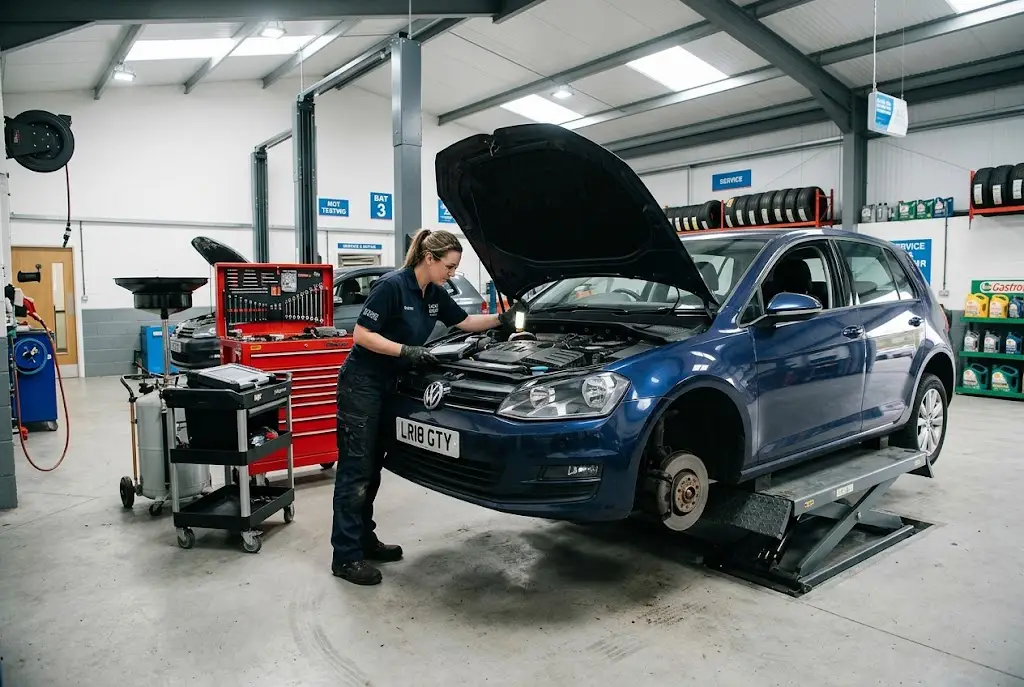
Car servicing is a broad subject that gives automotive businesses many opportunities to build useful search visibility. Customers search for everything from service intervals and interim servicing to full and major services, yet a website that targets only one commercial phrase can miss a large part of this journey. A stronger approach is to build connected content that answers motorists’ questions while supporting the pages where customers can enquire or book a service.
For UK garages and automotive businesses, this means treating SEO as an organised topic rather than a collection of unrelated blog posts. By combining service pages, educational guides, semantic SEO and contextual internal linking, a website can develop clearer topical signals and provide a better experience for visitors.
Why Car Servicing Needs a Content Cluster
When someone searches for car servicing, they may have very different intentions. One motorist could be ready to book a service, while another may be trying to understand how often their vehicle needs maintenance. Someone else may be comparing an interim service with a full service or wondering what happens during a major service.
These searches represent different stages of the customer journey. Instead of forcing all of them onto one page, a content cluster can provide a dedicated resource for each important question and connect those resources through internal links.
A well-planned servicing cluster might include content covering:
- General car servicing
- Vehicle service intervals
- Interim servicing
- Full car servicing
- Major servicing
- Service warning signs
- Manufacturer service schedules
- Seasonal vehicle checks
- Servicing for different vehicle types
- Common questions about servicing costs and preparation
The central service page can then act as the commercial destination, while supporting articles answer specific informational searches.
How Car Servicing Content Supports Topic Authority
Topical authority is strengthened when a website demonstrates meaningful coverage of a subject. For an automotive business, that does not mean publishing dozens of pages with almost identical wording. Instead, each page should have a distinct purpose.
For example, a guide explaining vehicle maintenance can provide broader preventive-care information, while a dedicated servicing article can focus specifically on scheduled professional maintenance.
Likewise, a business that offers EV servicing can develop specialist content for electric vehicles rather than repeating general servicing information across multiple pages.
This structure helps create a network of related resources. Visitors can move from a broad explanation to a specific service, while search engines can better understand the relationship between the pages.
Build a Strong Core Car Servicing Page
The main car servicing page should have a clear commercial purpose. It should tell visitors what the business provides, who the service is suitable for and how they can take the next step.
However, the page should not attempt to answer every possible servicing question in full. Doing so can make the page unnecessarily long and blur its primary intent.
Instead, the core page can briefly explain the major service options and link to detailed supporting resources. For instance, a section discussing service levels can point readers towards dedicated information about interim, full and major servicing.
This creates a clear hierarchy:
- Core page: the main commercial car servicing service
- Supporting guides: detailed explanations of specific servicing subjects
- Specialist pages: servicing for particular vehicle technologies or requirements
- Related resources: maintenance and inspection information
The result is a website architecture that is easier for users to understand and easier to expand over time.
What Is an Interim Service?
An interim service is generally designed for vehicles that need routine maintenance between more comprehensive service intervals. The precise work included can vary according to the vehicle, manufacturer recommendations and the garage carrying out the service.
Content targeting this subject should explain the purpose of an interim service without making universal claims about every vehicle. Motorists should be encouraged to check their manufacturer’s servicing schedule and discuss the appropriate maintenance level with a qualified professional.
A dedicated guide can answer practical questions such as when an interim service may be appropriate, what motorists should check before booking and how it differs from other servicing levels.
That supporting article can then link naturally back to the main car servicing page, giving readers a straightforward route towards booking information.
What Does a Full Car Service Involve?
A full car service is generally more comprehensive than a basic interim service, although the exact checks and replacements depend on the vehicle and service plan.
This makes it a useful topic for educational content because motorists often want to understand what they are paying for before choosing a garage.
A good article can explain the difference between routine checks, fluid inspections, component checks and any manufacturer-specific requirements. It should avoid presenting a single checklist as universal because servicing requirements vary between makes, models and engines.
Explaining these differences builds trust and creates opportunities for contextual links to vehicle maintenance, inspection and other relevant resources.
When Does a Major Service Matter?
Major servicing is another subject that deserves its own content when a business provides or discusses this type of work.
Customers may search for major service information because they are approaching a manufacturer-recommended interval or have been advised that their vehicle requires more extensive maintenance. The content should explain why service schedules matter and encourage motorists to follow the requirements relevant to their specific vehicle.
This page can also answer questions about service history, manufacturer schedules and the importance of keeping records. Where the business provides additional specialist services, appropriate internal links can guide visitors to related pages rather than making the major-service article cover every automotive topic.
Use Semantic SEO Instead of Repeating One Keyword
Semantic SEO allows a page to cover a subject naturally through related concepts, terminology and questions. For car servicing content, useful terms may include vehicle servicing, service intervals, service history, manufacturer recommendations, routine maintenance, service schedule and vehicle checks.
These terms should appear because they genuinely belong to the subject, not because a specific keyword percentage needs to be achieved.
Search engines can understand relationships between concepts, so a well-written article that comprehensively explains servicing is often more useful than a page that repeatedly uses the exact phrase without adding meaningful information.
The same principle applies across the wider automotive cluster. Content about auto services can establish the broader context, while more focused servicing pages address specific search intents.
Internal Linking Should Connect Related Servicing Topics
Internal linking is particularly important when building a topic cluster. Every link should have a clear editorial reason and help readers discover relevant information.
A servicing page might link to vehicle maintenance when discussing routine care. A maintenance guide might link back to servicing when professional scheduled maintenance becomes relevant. An inspection guide can connect to servicing content when discussing the condition of a vehicle.
Specialist services should also be connected where appropriate. For example, content about hybrid vehicles can link to hybrid servicing when discussing maintenance requirements for electrified vehicles.
Descriptive anchor text makes these relationships clearer. Rather than repeatedly using generic phrases such as “click here”, use natural wording that tells readers what they will find on the destination page.
Car Servicing Content Should Match Different Search Intent
One of the biggest advantages of a content cluster is the ability to target different stages of the search journey without making every page compete for the same query.
Informational Intent
Informational pages should answer questions clearly. Examples include guides about service intervals, differences between service levels and signs that routine maintenance may be due.
Commercial Investigation
These users are comparing options. Content can explain what to look for in a garage, what information to have ready and why manufacturer servicing requirements matter.
Transactional Intent
Users with strong booking intent should reach dedicated service pages that make the next step obvious. Clear service information, location details and contact or booking options can reduce friction.
Keeping these intents separate helps avoid cannibalisation while allowing the pages to support one another.
Use Content Marketing to Earn Relevant Links
Useful servicing content can also contribute to a broader link-building strategy. Practical guides, maintenance checklists and genuinely informative resources can provide value to automotive publishers and other relevant websites.
Instead of creating content solely to insert backlinks, focus on developing resources that deserve to be referenced. A comprehensive guide explaining service schedules, for example, may be useful to motoring communities, local publications or automotive websites.
This approach connects content marketing with the broader automotive outreach process. Outreach becomes more effective when the resource being promoted offers genuine editorial value.
Avoid Common Car Servicing SEO Problems
Creating Nearly Identical Articles
Publishing separate articles that all explain the same servicing concept can create unnecessary overlap. Each page should target a distinct question or search intent.
Ignoring Manufacturer Differences
Service requirements vary between vehicles. Avoid presenting general servicing intervals or checklists as universal rules.
Writing Only for Search Engines
Readers need practical answers, not pages filled with repeated keywords. Explain concepts naturally and make the content useful even if the visitor never sees a search engine.
Leaving Supporting Pages Isolated
A detailed article has more value when it connects to relevant pages elsewhere on the site. Review older content regularly and add internal links when new resources are published.
How to Expand a Car Servicing Content Cluster
A useful cluster can grow gradually. Start with the core commercial servicing page, then identify the questions customers repeatedly ask before and after booking.
From there, build supporting content around service levels, maintenance schedules, vehicle inspections and specialist servicing areas. Once enough content exists, review the internal linking structure to ensure the most important pages receive relevant contextual links.
Businesses can also use customer questions as a source of future topics. Questions asked over the phone, through booking forms or during service appointments can reveal genuine information gaps that deserve dedicated resources.
This creates an editorial strategy based on real customer needs rather than an endless list of disconnected keyword variations.
Final Thoughts
Building topical authority around car servicing requires more than creating one optimised service page. A strong strategy connects commercial pages with detailed educational resources, specialist subjects and broader vehicle maintenance information.
Content clusters provide the structure, semantic SEO strengthens relevance and internal linking connects the entire subject together. When combined with useful content marketing and relevant automotive outreach, the result can be a website that serves motorists better while building a stronger organic search presence.
The most effective approach is to keep every page focused on a clear purpose. Answer the question the searcher actually has, link naturally to the next relevant resource and make sure commercial pages remain easy to find. Over time, this creates a coherent automotive knowledge hub rather than a collection of isolated articles.