
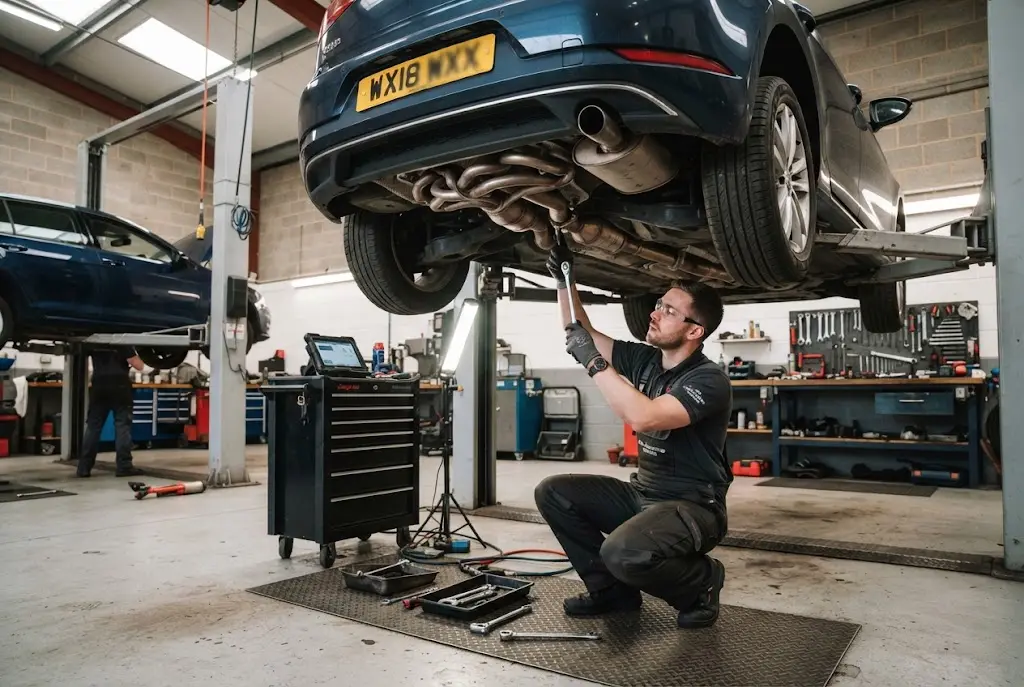
Auto exhaust repair is an important automotive service for drivers dealing with unusual exhaust noise, fumes, visible smoke, poor vehicle performance or an emissions-related problem. The exhaust system does more than carry gases away from the engine. It also includes components that contribute to noise control and emissions management, making proper inspection and maintenance important for everyday driving and MOT preparation.
For automotive businesses, exhaust services also represent a valuable commercial search topic. A well-structured auto exhaust repair page can answer immediate customer questions while connecting naturally with supporting content about exhaust replacement, catalytic converters, emissions systems and wider vehicle maintenance.
What Does Auto Exhaust Repair Include?
Auto exhaust repair can involve inspecting, repairing or replacing different components of a vehicle’s exhaust system. The exact work depends on the vehicle, the condition of the system and the fault identified during inspection.
Common exhaust-related components can include pipes, silencers, mounting points, catalytic converters and other emissions-control equipment. A garage may need to investigate a leak, damaged component, insecure mounting, excessive noise or another problem before deciding whether repair or replacement is appropriate.
Because exhaust systems can vary significantly between vehicles, customers should not assume that a particular component needs replacing simply because they notice one symptom. A professional inspection can help establish the underlying problem.
Common Signs You May Need Exhaust Repair
Drivers may notice several warning signs when an exhaust system develops a problem. These can include a louder-than-usual exhaust note, unusual rattling, visible damage, exhaust fumes in or around the vehicle, or changes noticed during an emissions test.
Some exhaust problems are obvious, while others may only become apparent during a proper inspection. For example, the UK MOT inspection manual requires the exhaust system of internal-combustion vehicles, including hybrids, to be checked for overall security. The guidance also covers major leaks and situations where exhaust fumes enter the cabin. GOV.UK’s MOT guidance for exhaust systems provides the relevant inspection criteria.
This is why an unusual sound or smell should not simply be ignored. A minor-looking issue may require investigation before it develops into a more significant repair.
Auto Exhaust Repair and Exhaust Replacement
Not every exhaust problem requires complete exhaust replacement. Depending on the vehicle and fault, a garage may be able to repair a damaged section or replace a specific component.
Exhaust replacement may become appropriate when a component is severely corroded, damaged, insecure or no longer suitable for continued use. The correct solution depends on the condition of the system and the vehicle manufacturer’s specifications.
For customers, the important distinction is between identifying the symptom and identifying the required repair. A loud exhaust does not automatically mean the entire system needs replacing. Likewise, a visible problem should be assessed in context rather than treated as an isolated component failure.
A useful service page should therefore explain both repair and replacement options without promising a specific outcome before the vehicle has been inspected.
Understanding Exhaust Emissions Systems
Modern vehicles use emissions-control systems designed to reduce harmful pollutants from the exhaust. These systems vary according to vehicle type, engine technology, fuel and age.
The current UK MOT inspection manual includes checks of visible and identifiable emissions-control components. For petrol vehicles, examples include catalytic converters, oxygen sensors and exhaust gas recirculation valves. For diesel vehicles, the guidance includes components such as diesel oxidation catalysts, diesel particulate filters, exhaust gas recirculation valves and selective catalytic reduction valves.
This makes emissions systems an important supporting topic for an automotive content cluster. However, educational content should explain the role of these components without encouraging drivers to diagnose complex emissions faults themselves.
Catalytic Converters and Exhaust Problems
Catalytic converters are an important part of the emissions-control system on vehicles where they are fitted as standard. Their condition can therefore be relevant when investigating exhaust or emissions concerns.
UK MOT guidance states that, for vehicles first used on or after 1 September 2002, original emissions-control equipment such as catalytic converters must not be missing, obviously modified or obviously defective where it is visible and identifiable during the applicable inspection.
This gives automotive businesses a useful opportunity to create a dedicated educational article about catalytic converters and link it to the main exhaust repair service page. Such supporting content can explain what a catalytic converter does, what symptoms may lead to an inspection and why professional diagnosis matters.
Why Exhaust Leaks Should Be Investigated
An exhaust leak can affect more than the sound of a vehicle. Depending on where the leak occurs, it can also be relevant to emissions testing and vehicle safety.
The DVSA MOT inspection manual identifies a major exhaust leak as a major defect and also identifies exhaust fumes entering the cabin as a serious issue. It additionally notes that an induction or exhaust leak that could affect emissions levels can result in a major defect during the relevant emissions inspection.
For content purposes, this means an article about exhaust leaks can support the main auto exhaust repair service page while addressing a specific informational search intent. The supporting article can explain common warning signs and when drivers should arrange a professional inspection.
Auto Exhaust Repair and MOT Preparation
Exhaust condition is relevant to the UK MOT because the inspection includes both the physical exhaust system and applicable emissions requirements.
GOV.UK guidance states that the exhaust system is checked for security and that serious leaks, insecurity and fumes entering the cabin can lead to defects. Exhaust noise and emissions are addressed separately within the MOT inspection requirements.
Drivers should therefore avoid treating an exhaust repair as something that only matters immediately before an MOT. If the vehicle is already showing warning signs, arranging an inspection earlier can provide an opportunity to identify the problem and understand what work may be required.
Businesses can support this search intent with useful content about MOT preparation, vehicle maintenance and common reasons for exhaust-related defects. The content should remain accurate and avoid guaranteeing that a particular repair will result in an MOT pass.
How SEO Copywriting Can Build Exhaust Service Visibility
For an automotive website, the main service page should target the commercial intent behind searches such as auto exhaust repair and exhaust repair. Supporting articles can then cover narrower subjects that answer related questions.
A logical content structure could include:
- An auto exhaust repair service page targeting customers who need professional assistance.
- An article explaining common signs of exhaust problems.
- A guide to exhaust replacement and when it may be necessary.
- An educational article about catalytic converters.
- A guide explaining vehicle emissions systems.
- A resource about exhaust leaks and their potential implications.
- A broader vehicle maintenance guide connecting exhaust care with other services.
This structure gives each page a distinct purpose. It also provides opportunities for natural internal linking without repeating the same information across several URLs.
Use Internal Linking to Build Topical Authority
Internal linking is particularly useful when an automotive website covers several related services. A supporting article about catalytic converters can link to the main exhaust repair page when a reader needs professional assistance. An exhaust replacement guide can link back to the repair page when discussing inspection and repair options.
The same principle can connect exhaust content with other automotive maintenance topics. For example, LinkCircle’s wheel alignment guide addresses another common vehicle service and can sit within the wider automotive-service content architecture without competing directly with exhaust-related searches.
Internal links should always serve a clear editorial purpose. A page should not contain links merely to increase the number of internal links. Each link should help the reader move from one relevant question or service to another.
This approach also supports topical authority because search engines can more easily understand the relationships between the site’s automotive resources when the structure is logical and contextually connected.
Creating Supporting Articles for Exhaust Services
Supporting articles should be planned around real customer questions rather than variations of the same keyword. For example, an article titled “What Are the Signs of a Failing Exhaust?” has a different purpose from a commercial page targeting auto exhaust repair.
Similarly, “How Does a Catalytic Converter Work?” can address an educational audience, while “Exhaust Replacement Services” can target customers who are closer to making a purchasing decision.
This distinction makes SEO content more useful. It also reduces the risk of creating multiple pages that compete for the same search intent.
Digital PR and Automotive Content
Exhaust-related content can also contribute to broader digital PR campaigns when it offers genuinely useful information. Automotive businesses can develop original research, maintenance checklists, seasonal guides or data-led studies that journalists and industry publishers may find useful.
For example, an original study examining common vehicle maintenance questions could become a linkable asset. A detailed guide explaining UK emissions terminology could also provide editorial value when supported by accurate information.
The goal of digital PR should not be to manufacture links around a service keyword. Instead, useful resources can earn attention and brand mentions because they provide information that other publishers can reference.
Why Accurate Exhaust Content Matters
Automotive SEO requires more care than simply inserting commercial keywords into generic copy. Exhaust systems are connected with emissions, vehicle safety and MOT requirements, so published information should be accurate and appropriately qualified.
The DVSA’s current MOT manual provides detailed inspection requirements for exhaust noise, emissions and emissions-control equipment, making it a suitable authoritative source for UK-focused educational content. The manual was updated in June 2026, so businesses should check current guidance rather than relying indefinitely on older articles.
Good SEO copywriting should therefore combine commercial relevance with responsible information. When a technical diagnosis is required, the content should encourage appropriate professional assessment rather than presenting a general symptom as a definite fault.
Build a Strong Automotive Exhaust Content Cluster
Auto exhaust repair can form the centre of a strong automotive content cluster when the main service page is supported by useful, distinct resources. Exhaust repair, exhaust replacement, catalytic converters and emissions systems all provide opportunities to answer different stages of the customer journey.
The most effective structure connects these topics without making every page compete for the same keyword. Commercial service pages can target customers who need a repair, while supporting articles can answer questions that arise before or after that decision.
With clear keyword mapping, natural internal linking, accurate SEO copywriting and genuinely useful supporting articles, an automotive website can create a stronger topical foundation around exhaust services. The result is not simply more content. It is a connected information system that helps drivers find relevant answers and discover the appropriate service when they need professional assistance.