
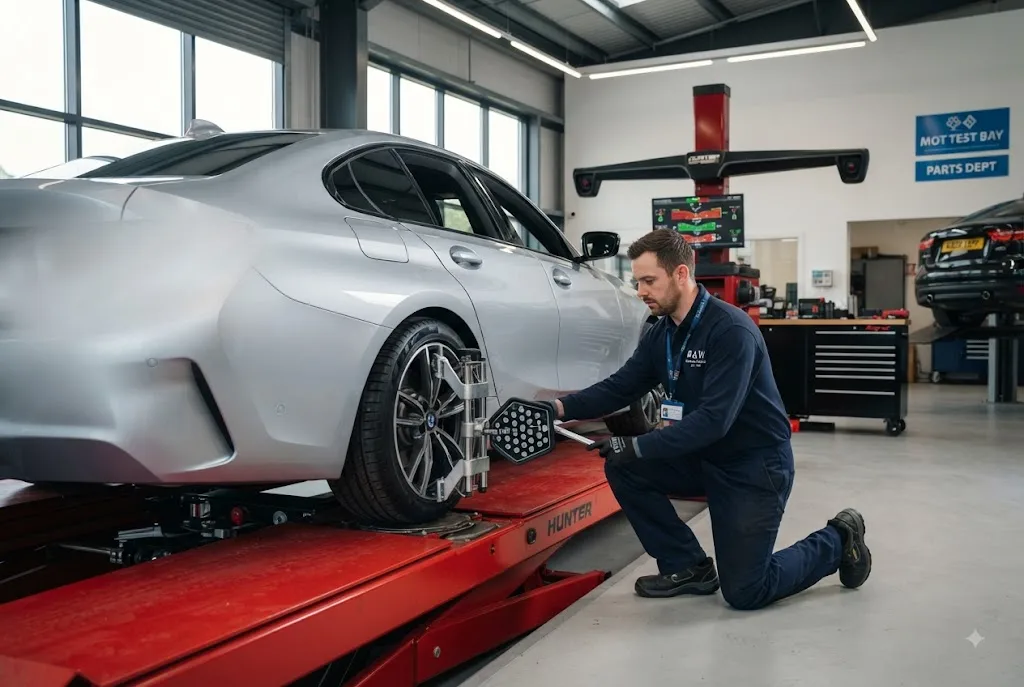
Wheel alignment is a highly local automotive service, which makes it a valuable opportunity for UK garages competing in search. Drivers rarely want to travel a long distance simply to have their wheels checked or aligned. They usually look for a trusted provider nearby, compare services and reviews, and then decide whether to make an appointment.
That combination of strong service intent and geographic relevance gives garages an opportunity to build targeted organic visibility. Instead of trying to compete for every automotive keyword, a business can create a focused search strategy around wheel alignment, wheel balancing, wheel tracking, steering alignment and related vehicle maintenance services.
A strong local SEO strategy can then connect these service pages with location information, helpful guides and other automotive topics. The result is a website structure that serves both search engines and motorists who need a practical solution.
Why Wheel Alignment Is Valuable for Local Search
Wheel alignment searches often have clear commercial intent. A driver may notice that the vehicle pulls to one side, the steering wheel appears off-centre or the tyres are wearing unevenly. Rather than simply researching the problem, the driver may be looking for a garage that can inspect and correct it.
This makes the service different from a broad informational automotive topic. The searcher is often close to taking action.
For a local garage, the goal should therefore be to create a page that answers the customer’s immediate questions while making it easy to understand where the service is available, what it involves and how to arrange an appointment.
Google’s guidance on establishing business details also emphasises the importance of maintaining accurate information about a local business so users can find the business and its official information through Search and Maps. Google’s guidance on business details provides further information for local businesses. :contentReference[oaicite:0]{index=0}
Wheel Alignment and Local Search Intent
Understanding search intent should come before creating location pages or adding keywords. A driver searching for “wheel alignment” may want an explanation of the service, while someone searching for “wheel alignment near me” is more likely to be looking for a provider.
Other searches can be even more specific:
- wheel alignment near me
- 4 wheel alignment
- wheel tracking near me
- car steering alignment
- wheel alignment garage
- wheel alignment cost
- wheel alignment in [town]
These variations represent related but slightly different needs. A well-structured website can address them without creating a separate page for every keyword variation.
The main service page should explain the core service, while useful supporting content can answer questions about symptoms, benefits, costs and related maintenance.
Wheel Alignment vs Wheel Balancing
One of the most useful content opportunities is explaining the difference between wheel alignment and wheel balancing. Customers often confuse the two because both relate to wheels and driving comfort.
Wheel alignment concerns the angles and positioning of the wheels relative to the vehicle and one another. Correct alignment helps the vehicle track properly and can reduce abnormal tyre wear. Wheel balancing, by contrast, deals with the distribution of weight around the wheel and tyre assembly.
These services can be related commercially, but they should not be treated as identical services in website content.
A garage that offers both can create separate service information while explaining when each may be relevant. This allows the website to capture more specific searches without creating unnecessary keyword repetition.
Why Customers May Search for Both Services
Drivers experiencing vibration, uneven tyre wear or handling concerns may not know which service they actually need. A useful article can explain common symptoms and encourage the customer to have the vehicle professionally inspected.
This type of educational content can then link naturally to the relevant service pages. It is more helpful than simply repeating “wheel alignment” throughout an article.
Wheel Tracking and Steering Alignment Content
Terminology can vary between customers and automotive businesses. Some motorists use “wheel tracking” when referring to alignment, while others search for “steering alignment” or simply “tracking”.
This creates a semantic SEO opportunity. A comprehensive service page can acknowledge commonly used terminology while clearly explaining what the garage actually provides.
For example, a page might explain that customers sometimes refer to alignment as tracking, then describe the inspection and adjustment process in straightforward language.
The important point is to avoid creating several nearly identical pages purely to target slight variations of the same service. One strong, comprehensive service page can often provide a better user experience.
Building a Strong Wheel Alignment Service Page
A local service page should answer the questions a potential customer is likely to have before contacting the garage.
A useful structure could include:
- What wheel alignment is
- Common signs of alignment problems
- Why correct alignment matters
- What the inspection process involves
- Whether two-wheel or four-wheel alignment is available
- Which vehicles the garage supports
- Whether wheel balancing or tracking is also offered
- The areas served by the business
- How to book or request an appointment
This information gives the page genuine commercial value. It also creates opportunities to use related terms naturally without forcing them into every paragraph.
Use Symptoms to Match Customer Questions
Many customers will not begin their search with the name of the service. They may search for a symptom instead.
For example, they might search for why a car pulls left, why a steering wheel is not straight or why one tyre is wearing faster than another. A useful guide can explain that several issues may cause these symptoms and that professional inspection can identify the underlying problem.
Where alignment is a plausible cause, the article can link to the main service page.
This approach creates a stronger connection between informational search and commercial intent.
Location Pages and Service Area SEO
Location pages can be valuable for garages that genuinely operate across multiple areas. However, their purpose should be to provide useful local information rather than simply create more URLs.
For example, a garage with a physical workshop in Birmingham and a genuine customer base across nearby areas might have a location page explaining where it is based, which areas it serves and which automotive services are available.
A strong location page can include:
- Accurate business name and contact information
- Physical address where applicable
- Opening hours
- Directions or location information
- Services available at that location
- Relevant local service information
- Booking or enquiry options
Google’s LocalBusiness structured-data guidance recommends defining each physical business location using the most specific applicable local-business type and providing relevant information such as name and address. :contentReference[oaicite:1]{index=1}
Structured data is not a substitute for useful content, but accurate business information can help search engines understand the page and the business it represents.
How to Avoid Thin Location Pages
One of the biggest mistakes in service area SEO is producing dozens of pages that are almost identical apart from the town name.
Imagine a garage creates pages titled “Wheel Alignment in Leeds”, “Wheel Alignment in Bradford”, “Wheel Alignment in Wakefield” and “Wheel Alignment in York”, while offering exactly the same text on every page. If there is no genuine local differentiation, these pages add little value for users.
A better approach is to create pages only where there is a legitimate business and customer relationship with that area. Each page should contain accurate information and make the local connection clear.
Quality should come before quantity.
Local SEO Signals for Automotive Garages
Local SEO involves more than website content. A garage should make sure its business information is accurate and consistent across the platforms customers use to find it.
Its Google Business Profile should accurately represent the business, including the correct name, address where applicable, contact information, hours and relevant service details.
Google explains that claiming and managing a Business Profile allows a verified business owner to provide or edit information such as its address, contact details, business type and photos for Google Search and Maps. :contentReference[oaicite:2]{index=2}
Reviews can also influence the customer’s decision-making process. While businesses should never manipulate or fabricate reviews, they can encourage genuine customers to share their experiences through appropriate channels.
Content Marketing for Wheel Alignment Searches
A service page should be the commercial foundation, but supporting content can help capture customers earlier in the research process.
Useful article ideas include:
- Signs your car may need wheel alignment
- What causes uneven tyre wear?
- How wheel tracking works
- Wheel alignment vs wheel balancing
- Can potholes affect wheel alignment?
- Why is my steering wheel off-centre?
- How often should wheel alignment be checked?
Each article should have a distinct purpose. A guide about uneven tyre wear should focus on causes and diagnosis, while an article about wheel balancing should explain the difference between balancing and alignment.
This prevents the website from publishing multiple articles that compete for exactly the same search intent.
Internal Linking and Automotive Topical Authority
Internal linking is especially useful when a garage is building an automotive content cluster. Service pages can connect with supporting guides and related services, helping users navigate between subjects that naturally belong together.
For example, an article about wheel alignment can link to the broader EV servicing topic when discussing maintenance for electric vehicles. Electric vehicles still require attention to tyres, steering and suspension, so the relationship can be useful when explained in the right context.
Similarly, content about electrified vehicles can connect to hybrid servicing when discussing how maintenance needs can differ between vehicle technologies.
These links should remain editorial rather than being inserted simply to increase the number of internal links on a page.
Wheel Alignment for Electric and Hybrid Vehicles
As automotive technology changes, wheel-related services remain relevant across different vehicle types. Electric and hybrid vehicles still depend on correctly maintained tyres, steering and suspension systems.
This creates an opportunity for garages that already have dedicated EV or hybrid content to explain how traditional services fit into the wider maintenance picture.
For example, a garage might publish a guide on tyre wear in electric vehicles and explain why correct alignment remains important. The guide can then point customers towards the relevant service page.
The connection should be practical rather than promotional. Customers should understand why the subject matters to their vehicle.
How Reviews and Local Reputation Support Visibility
For a service such as wheel alignment, reputation can have a major influence on whether a driver chooses one garage over another. Search visibility may bring a customer to a results page, but reviews, service information, photographs and clear contact details can influence the final decision.
This means local SEO should be considered part of a wider customer experience strategy.
A garage should aim to provide accurate information before the booking, professional service during the visit and clear communication afterwards. Positive reviews should be earned through genuine customer experiences rather than treated purely as an SEO tactic.
Technical SEO for Local Automotive Pages
A technically sound website provides the foundation for local search. Important service pages should be accessible to search engines, linked from relevant parts of the website and included in the site’s overall information architecture.
Businesses can also use appropriate structured data where it accurately represents the page and organisation. Google’s documentation notes that LocalBusiness structured data can communicate information such as business hours and other business details, and recommends validating structured-data implementations before deployment. :contentReference[oaicite:3]{index=3}
However, technical optimisation should support the content rather than distract from it. A perfectly marked-up page with weak service information is unlikely to provide the same value as a page that genuinely answers the customer’s questions.
Measuring Local Search Performance
SEO performance should be measured using metrics that reflect both visibility and business outcomes.
Useful measures include:
- Organic impressions for alignment-related searches
- Organic clicks to service pages
- Visibility for target locations
- Google Business Profile interactions
- Phone calls and enquiry submissions
- Appointment requests
- Organic conversions
Rankings are useful, but they should not be the only measure of success. A service page that generates a small number of highly relevant enquiries can be more commercially valuable than a high-traffic article that attracts visitors with no intention of becoming customers.
Common Local SEO Mistakes for Wheel Alignment Businesses
Targeting Every Nearby Town
Trying to rank for every town within a large radius can lead to thin and repetitive content. Focus on locations where the business has a genuine customer connection.
Ignoring the Main Service Page
Some businesses create multiple local pages without first developing a strong core service page. The central service page should explain the service comprehensively and provide a clear destination for supporting content.
Overusing Exact-Match Keywords
Natural language is more useful than repeating “wheel alignment” in every sentence. Terms such as tracking, steering alignment, tyre wear and vehicle handling can be used where they genuinely describe the subject.
Forgetting Mobile Users
Automotive searches often happen when a driver is trying to solve an immediate problem. The website should make essential information easy to find on a mobile device, including phone numbers, location details and booking options.
A Practical Wheel Alignment SEO Framework
A garage starting from scratch can build its local SEO strategy in several stages.
First, create a strong wheel alignment service page that clearly explains the service and its benefits. Next, add supporting content around symptoms, tyre wear, wheel tracking and related questions.
Then strengthen local relevance through accurate business information and genuinely useful location pages where appropriate. Connect the pages through natural internal links so customers can move from informational content to commercial services.
Finally, monitor organic visibility and conversions. Improve pages based on actual customer questions, search behaviour and business performance rather than publishing content simply to increase the number of URLs.
The Future of Local Automotive Search
Local automotive SEO is likely to become increasingly specialised as drivers search for services by vehicle type, problem and location. A general garage may need to communicate its broad capabilities, while specialist businesses can build deeper authority around services such as wheel alignment, hybrid maintenance or electric vehicle servicing.
This makes topical organisation increasingly important. A well-structured website can serve traditional automotive searches while also expanding into newer vehicle technologies.
The most successful businesses will not necessarily be the ones with the largest number of pages. They will be the ones that provide the clearest answers, the strongest local relevance and the most useful path from search result to service appointment.
Final Thoughts
Wheel alignment is an excellent example of how a specific automotive service can become the centre of a strong local SEO strategy. The service has clear commercial intent, naturally connects with related maintenance topics and can be targeted geographically without sacrificing useful content.
UK garages should focus on creating a comprehensive service page, developing genuinely helpful supporting content and building location pages only where they add real value. Accurate business information, appropriate structured data and a strong local presence can then reinforce the wider strategy.
Most importantly, SEO should remain connected to the customer experience. A motorist searching for alignment wants to understand the problem, find a trustworthy nearby provider and arrange the service easily. A website that supports that journey has a much stronger foundation for sustainable local search growth.