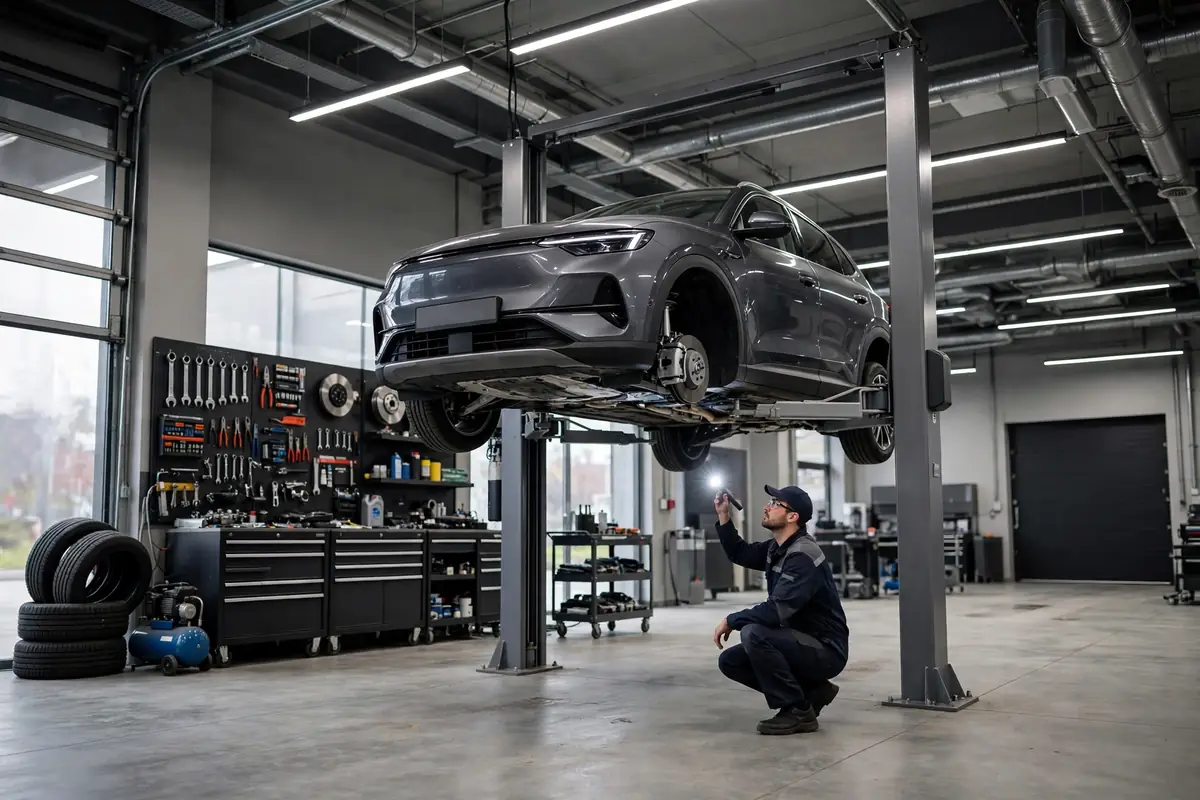

An effective automotive SEO strategy is about more than choosing a list of vehicle-related keywords and publishing occasional blog posts. Automotive businesses need a connected content system that helps search engines understand their expertise while giving motorists useful answers at every stage of their search journey.
A garage, mobile mechanic, vehicle inspection provider or automotive service business can have dozens of potentially relevant topics. Servicing, repairs, inspections, pricing, maintenance and local services can all attract different types of searches. Without a clear structure, however, these pages can become disconnected, repetitive or difficult for users to navigate.
A strategic approach combines content clusters, topical maps, keyword clustering, pillar pages and contextual internal linking. The result is a website where individual pages support one another instead of competing for the same search intent.
What Is an Automotive SEO Strategy?
An automotive SEO strategy is a structured plan for creating, organising and optimising website content around the subjects that matter to an automotive business and its customers.
It considers more than individual keywords. A strong strategy looks at the relationship between topics, search intent, commercial services, educational resources and geographical relevance.
For example, a garage may provide servicing, inspections and repairs. Instead of publishing unrelated articles about each service, the website can build connected topic groups around vehicle maintenance, inspections, service costs and specific repair questions.
Each group can contain a central resource supported by more focused pages. Internal links then connect related information where it makes sense for the reader.
This structure makes the website easier to navigate and gives search engines clearer signals about the breadth and depth of its automotive content.
Start With Automotive Content Clusters
Content clusters organise related articles around a central subject. This is one of the most useful ways to prevent an automotive website from becoming a collection of disconnected blog posts.
A maintenance cluster, for example, could include content about servicing schedules, warning signs, common maintenance tasks, vehicle inspections and ownership costs.
A pricing cluster could focus on service costs, repair estimates, factors affecting garage pricing and questions motorists commonly ask before authorising work.
The cluster should be built around genuine relationships between topics. Not every automotive keyword needs its own article, and closely related searches may sometimes be better addressed on one comprehensive page.
Good clustering therefore requires editorial judgement. The objective is to create useful resources rather than produce a page for every minor variation of a keyword.
Create a Topical Map Before Publishing
A topical map provides a wider view of the subjects a website intends to cover. It can help identify the main automotive themes, supporting subtopics and relationships between them.
For an automotive service website, a topical map might include:
- Vehicle inspections.
- Routine servicing.
- Vehicle maintenance.
- Repair services.
- Diagnostic services.
- Service pricing and ownership costs.
- Mobile automotive services.
- Local automotive services.
- Used-car buying considerations.
Each broad subject can then be broken into narrower questions based on genuine customer needs.
This process also helps identify content gaps. If a website has several articles about repairs but nothing explaining the inspection process, a new resource may strengthen the overall subject coverage.
The map should remain flexible. Search demand, business priorities and customer questions can change, so the editorial structure should be reviewed as the website develops.
Use Keyword Clustering Instead of One Keyword Per Page
Keyword clustering involves grouping closely related search terms according to their meaning and intent. It can prevent a common SEO problem where several pages are created to target variations that could have been covered by one stronger resource.
For example, searches related to the cost of servicing a car may overlap significantly. Creating separate thin pages for every slight variation can produce unnecessary repetition.
A comprehensive car service cost guide can instead address the main pricing intent while covering closely related concepts such as service pricing, repair estimates and vehicle ownership costs.
On the other hand, a search for a specific automotive service may have a different commercial intent and deserve its own service page.
The key question is not simply “Does this keyword exist?” It is “Does this search represent a distinct user need that deserves a distinct resource?”
Build Strong Pillar Pages
Pillar pages provide comprehensive coverage of a broad topic while connecting readers to more specific supporting resources.
A pillar page should be genuinely useful on its own. It should introduce the subject, answer important questions and direct readers towards deeper information where appropriate.
For an automotive website, a pillar page about vehicle maintenance might cover routine servicing, inspections, tyres, brakes, fluids and common warning signs. Individual supporting articles can then explore each subject in greater detail.
This structure creates a hierarchy that is easier to understand than a flat collection of articles.
Pillar pages should not simply be long pages stuffed with links. Their purpose is to provide useful overview content while helping readers discover relevant supporting information.
Use Internal Linking as Part of the Architecture
Internal linking is one of the most practical ways to connect an automotive website’s content. Links should guide users towards the next resource they are likely to need.
For example, a guide discussing inspection findings can naturally link to auto inspection services. A general article about garage content can point towards relevant service information rather than forcing readers to search the website themselves.
Internal links also help establish relationships between pages. A central resource can link to supporting articles, while supporting articles can link back to the broader topic where appropriate.
Anchor text should describe the destination naturally. Avoid repeatedly using the exact same keyword as anchor text when a more natural phrase would provide better context.
Most importantly, internal links should have a reason to exist. A page does not become stronger simply because it contains dozens of links.
Apply Semantic SEO to Automotive Content
Semantic SEO focuses on the meaning and relationships surrounding a topic rather than relying on exact keyword repetition.
For automotive content, this means covering concepts that naturally belong to the subject. An article about servicing might discuss maintenance schedules, filters, fluids, inspections, vehicle condition and manufacturer recommendations where relevant.
Similarly, content about vehicle inspections can discuss inspection reports, visible defects, mechanical condition and the difference between different types of assessments.
This creates richer topical coverage while allowing the writing to remain natural.
Semantic relevance should never be an excuse to add unrelated terms. Every supporting concept should contribute to the reader’s understanding of the main subject.
Match Content With Search Intent
A successful SEO structure separates different types of search intent.
Informational searches usually require educational content. A motorist may want to understand a vehicle problem, maintenance task or inspection process.
Commercial searches often involve comparing services, providers or costs. These searches may be better served by detailed service and pricing pages.
Transactional searches indicate that the user may be ready to contact or book a service. These visitors need clear commercial information and an obvious next step.
Trying to make one page satisfy every intent can weaken its purpose. A better approach is to create complementary pages and connect them through contextual internal links.
Connect Local SEO With the Wider Content Architecture
Automotive businesses that serve specific geographical areas need to consider local search alongside broader topical SEO.
A mobile mechanic, for example, may need service area pages and location-focused content. These pages should connect with the core service resources rather than exist as isolated local landing pages.
A well-structured local strategy can therefore combine location pages with service pages and educational resources. This helps a user move from “mobile mechanic in my area” towards information about the specific service they require.
For businesses providing mobile auto service, this relationship is particularly important because location and service intent are closely connected.
Local content should remain genuine. Businesses should avoid creating pages for areas they do not actually serve simply because those locations have attractive search volumes.
Use Data and Research as Authority Assets
Not every automotive website should rely entirely on standard informational articles. Original research can provide another layer of authority.
Inspection businesses may be able to analyse anonymised internal data and publish useful findings. A carefully developed research project can become a statistics page, an editorial resource and an outreach asset.
The important requirement is credibility. Data should be genuine, methodology should be explained and conclusions should remain within what the dataset can reasonably support.
This type of content can complement traditional SEO articles and potentially provide a stronger reason for relevant publishers to reference the website.
Plan an Editorial Calendar Around the Architecture
Once the topical structure has been established, editorial planning becomes much easier.
Instead of asking what blog post should be published this week, the content team can identify which part of the topical map needs strengthening.
A simple planning process might involve:
- Identify the core business services.
- Map the main customer questions around each service.
- Group related searches by intent.
- Identify existing pages that already satisfy those needs.
- Find genuine content gaps.
- Create or improve the appropriate page.
- Add contextual internal links to related resources.
- Review performance and update the strategy over time.
This creates a more deliberate publishing process and reduces repetitive content.
Build Authority Without Creating Content for Its Own Sake
Authority building is not simply about increasing the number of URLs on a website. A site with hundreds of thin articles may be less useful than one with a smaller collection of comprehensive, well-connected resources.
Every new page should have a clear purpose. It should answer a distinct question, support a commercial service, strengthen a topical cluster or provide genuinely useful original information.
Existing pages should also be considered before creating new ones. Sometimes the best SEO improvement is to expand, consolidate or restructure an existing resource rather than publish another article covering the same subject.
This helps protect the website against unnecessary keyword cannibalisation.
Support Content With Real Automotive Expertise
Automotive subjects often involve practical decisions that affect safety, maintenance and spending. Content should therefore be written responsibly.
Writers should avoid presenting a general article as a substitute for professional diagnosis when a vehicle problem requires inspection. Similarly, cost information should explain why prices vary instead of promising universal figures.
Where authoritative external guidance is relevant, reputable sources can provide additional context. For example, Google’s SEO Starter Guide provides general guidance on creating search-friendly websites and useful content.
The automotive business should then add its own genuine expertise and practical experience rather than simply repeating generic search-engine advice.
Measure the Entire Content System
An SEO strategy should be evaluated at both page and cluster level.
Individual metrics can include organic impressions, clicks, rankings, engagement and enquiries. At a broader level, businesses can examine whether important topic clusters are gaining visibility and whether users move between educational and commercial pages.
Internal linking can also be reviewed as the website grows. New pages may create opportunities to connect previously separate resources.
Performance data should inform future editorial planning, but it should not become the sole reason for publishing a topic. Search demand needs to be balanced with business relevance and the actual needs of the audience.
How to Build an Automotive SEO Strategy That Scales
A scalable automotive SEO strategy starts with architecture rather than volume. Establish the main topics, map supporting questions, group keywords by intent and create strong central resources. From there, publish supporting content that genuinely expands the subject.
Connect the pages through meaningful internal links and ensure commercial services have appropriate landing pages. Where the business has unique expertise or genuine datasets, develop original research that can add another layer of authority.
For content marketing teams, this system also creates a clear publishing roadmap. Instead of repeatedly asking what article to write next, the team can see which topic needs deeper coverage and which existing page should receive stronger support.
Final Thoughts
A strong automotive SEO strategy is ultimately a content architecture designed around people, topics and search intent. Content clusters provide structure, topical maps reveal opportunities, keyword clustering reduces duplication and pillar pages establish central resources.
Internal linking then connects the system, while semantic SEO helps individual pages cover subjects naturally and comprehensively. Local content can add geographical relevance for garages and mobile mechanics, while original research can provide valuable authority assets.
The objective should not be to publish as much content as possible. It should be to build the most useful and logically connected resource possible around the services and questions that matter to the audience.
When every page has a clear role, supports another relevant resource and contributes to the wider automotive subject, SEO becomes a long-term publishing system rather than a collection of isolated optimisation tasks.