
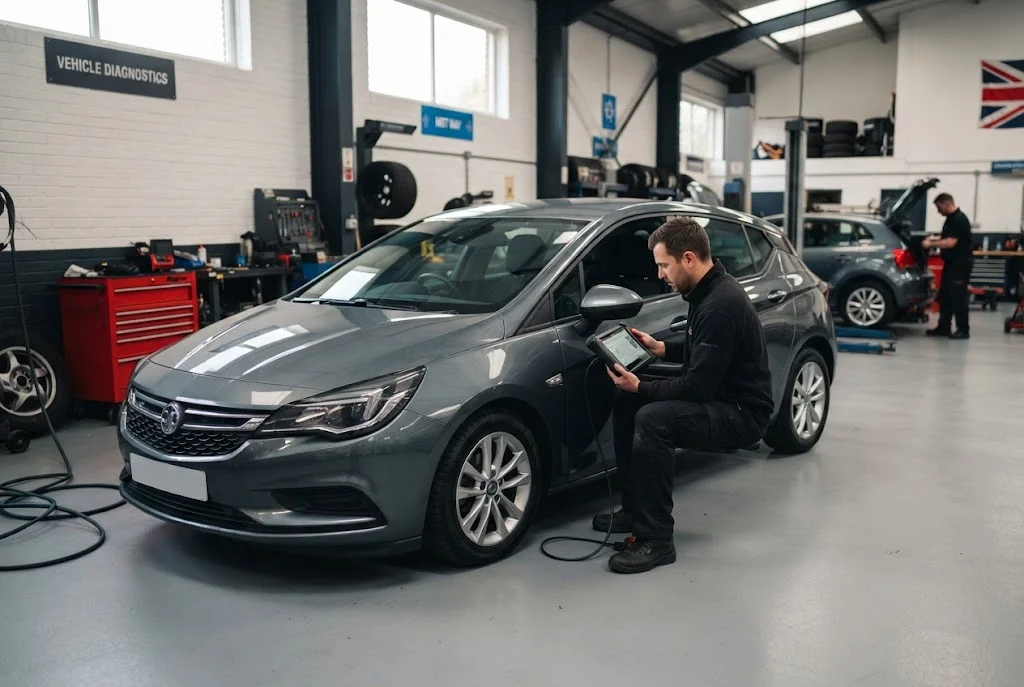
Auto inspection services play an important role in identifying vehicle problems before they become more expensive or difficult to resolve. Modern inspections can involve visual checks, electronic testing, fault-code analysis and other diagnostic procedures, depending on the vehicle and the reason for the inspection.
For automotive businesses, explaining these services clearly online is equally important. Customers often search for symptoms rather than technical solutions, using phrases such as “car warning light diagnosis”, “engine diagnostics near me” or “why is my car losing power?”. A useful website should therefore connect vehicle diagnostics with the questions real drivers are asking.
What Are Auto Inspection Services?
Auto inspection services cover a range of checks designed to assess a vehicle’s condition and identify potential problems. The exact inspection depends on the vehicle, its symptoms and the purpose of the appointment.
A statutory MOT, for example, has specific inspection requirements. The Driver and Vehicle Standards Agency (DVSA) states that the MOT checks important vehicle components against road safety and environmental standards. However, an MOT does not provide a complete mechanical health assessment: GOV.UK specifically notes that the MOT does not cover the condition of the engine, clutch or gearbox. The official MOT guidance explains what the test does and does not cover.
This distinction matters when creating service content. An inspection page should explain whether the business provides an MOT, a general vehicle inspection, electronic diagnostics, pre-purchase inspection or a combination of services.
Why Vehicle Diagnostics Matter During an Inspection
Modern vehicles contain numerous electronic control systems. When a warning light appears, the cause may not be immediately obvious from a visual inspection alone. Vehicle diagnostics can help technicians investigate electronic fault information and determine where further testing may be appropriate.
Diagnostic equipment can retrieve fault codes from compatible vehicle systems, but a fault code should not automatically be treated as the final diagnosis. Technicians may need to combine scan results with physical checks, manufacturer information, live data and other testing procedures before identifying the underlying problem.
This makes diagnostic content particularly useful for automotive websites. Instead of simply stating that a garage “has diagnostic equipment”, a service page can explain what customers can expect from the process and why further investigation may sometimes be necessary.
Auto Inspection Services and Engine Diagnostics
Engine diagnostics are often associated with warning lights, unusual performance or changes in how a vehicle starts and runs. Drivers may search for diagnostic help after seeing an engine management warning, experiencing rough running or noticing reduced performance.
A useful automotive service page should address these concerns without promising that a particular fault will always be identified instantly. The diagnostic process can vary according to the vehicle, symptoms and information available to the technician.
For example, content can explain that an inspection may begin with the customer’s reported symptoms before moving into electronic scanning and additional testing. This gives visitors a clearer understanding of why professional diagnostics can involve several stages rather than simply plugging in a scanner.
Common Reasons Drivers Seek Diagnostics
People may look for diagnostic services when they experience:
- An illuminated engine or dashboard warning light
- Unusual engine behaviour
- Starting difficulties
- Loss of power or changes in performance
- Unexpected warning messages
- Electrical or electronic issues
- Symptoms that are difficult to identify visually
These questions also create opportunities for supporting articles. A strong automotive content strategy can connect diagnostic information with related subjects such as auto electrical services, battery-related problems, braking concerns and suspension issues.
Understanding the Difference Between an MOT and a Diagnostic Inspection
One of the most important points automotive websites can clarify is that an MOT and diagnostic inspection are not interchangeable.
The DVSA’s current MOT inspection manual covers specific areas including brakes, steering, visibility, lamps and electrical equipment, tyres, suspension, body structure and emissions. It also explains the procedures and standards applicable to statutory MOT testing. The official MOT inspection manual provides the detailed framework.
A diagnostic inspection, by contrast, may be requested because a vehicle is displaying a particular symptom or electronic fault. Its purpose and scope depend on the service being offered.
Clear wording helps prevent customers from assuming that one type of inspection automatically includes every possible mechanical or electronic check.
Creating Better Diagnostic Content for Automotive Websites
For garages and automotive service businesses, useful diagnostic content should be written around customer problems rather than a list of technical equipment.
Instead of creating one generic page that repeatedly uses the phrase “car diagnostics”, businesses can develop supporting content around different search questions. Articles might explain warning lights, common diagnostic symptoms, battery testing, electrical faults or what happens during an inspection.
This approach also supports search intent. Someone searching for “what does an engine warning light mean?” has a different information need from someone searching for “vehicle diagnostics near me”. The first query is primarily informational, while the second may indicate that the person is looking for a service provider.
Matching the page to the intent behind the query can make the content more useful and create a clearer journey from informational article to relevant service page.
Using Long-Tail Keywords for Automotive SEO
Long-tail keywords can help automotive businesses cover specific questions that broader terms may not capture. Searchers may use highly specific phrases because they already know something about their problem.
Examples include:
- car diagnostic service near me
- engine warning light diagnostics
- vehicle diagnostics for warning lights
- professional car inspection service
- diagnostic inspection before buying a used car
The objective should not be to force every variation into one page. Instead, related queries can help identify useful sections, FAQs and supporting articles. This creates a more natural content structure while reducing the risk of producing several pages that compete for exactly the same search terms.
Semantic Optimisation for Auto Inspection Services
Semantic optimisation involves covering the concepts and relationships that naturally belong to a subject. For auto inspection services, relevant concepts may include vehicle condition, warning lights, fault codes, electronic systems, engine performance, inspection procedures and professional diagnosis.
Using these related concepts naturally helps a page communicate its subject clearly. It also gives readers more useful information than repeatedly inserting one target phrase.
For an automotive website, semantic optimisation can extend beyond individual pages. A central inspection service page can connect to supporting resources about electrical faults, battery problems, brakes, suspension and steering. This creates a logical topical network rather than a collection of unrelated blog posts.
How Featured Snippets Can Influence Diagnostic Content
Searchers often ask direct questions about vehicle problems. This creates opportunities to structure content around concise, useful answers.
For example, a section answering “What is a vehicle diagnostic test?” should provide a straightforward explanation before expanding into the details. Similarly, questions about warning lights or inspection processes can use short introductory answers followed by supporting information.
Clear headings, concise paragraphs and logically structured lists can make information easier for readers to scan. However, there is no guarantee that a page will receive a featured snippet simply because it uses a particular format.
Building an Automotive Inspection Content Cluster
A strong automotive SEO strategy should treat inspection content as part of a broader service cluster. The main inspection page can explain the overall service while supporting pages address specific vehicle systems and customer needs.
For example, a related auto battery service article can address battery testing, charging and replacement. A dedicated brake services page can cover brake inspections and repairs, while a suspension repair resource can address suspension and steering concerns.
These connections should only be used when they genuinely help the reader. Internal links work best when the destination provides additional information that naturally follows from the current section.
The same principle can be applied to local service pages. Once the core service content is established, businesses can develop location-specific pages where they have a genuine local presence and can provide useful, unique information.
What Makes Auto Inspection Content More Useful?
High-quality automotive content should answer practical questions without exaggerating what a service can accomplish. It should explain the purpose of an inspection, describe the possible diagnostic process and make clear when additional testing may be required.
It should also distinguish between regulated testing and broader garage services. This is particularly important in the UK, where MOT testing follows defined procedures and standards. The DVSA manual states that defects identified during an MOT are categorised according to their seriousness, including minor, major and dangerous categories. The DVSA defect categorisation guidance provides further information about how defects are treated during relevant vehicle tests.
For website owners, accuracy is part of SEO quality. Helpful content should build trust first rather than attempting to manipulate search visibility through excessive keyword repetition.
Final Thoughts on Automotive Diagnostics Content
Auto inspection services provide a useful foundation for an automotive content strategy because they connect broad inspection needs with specific vehicle problems. By explaining the difference between MOT testing, general inspections and diagnostic investigations, a website can better match different stages of the customer’s search journey.
The strongest approach combines accurate service information with useful supporting content. Vehicle diagnostics, engine diagnostics, electrical problems, battery services, braking and suspension can each form connected parts of the wider automotive topic. When these pages are linked naturally and written around genuine customer questions, they can create a stronger topical structure while remaining useful to drivers.
For automotive businesses, the goal should be straightforward: give visitors clear information, match content to their search intent and make it easy for them to find the appropriate service when they are ready to take the next step.