
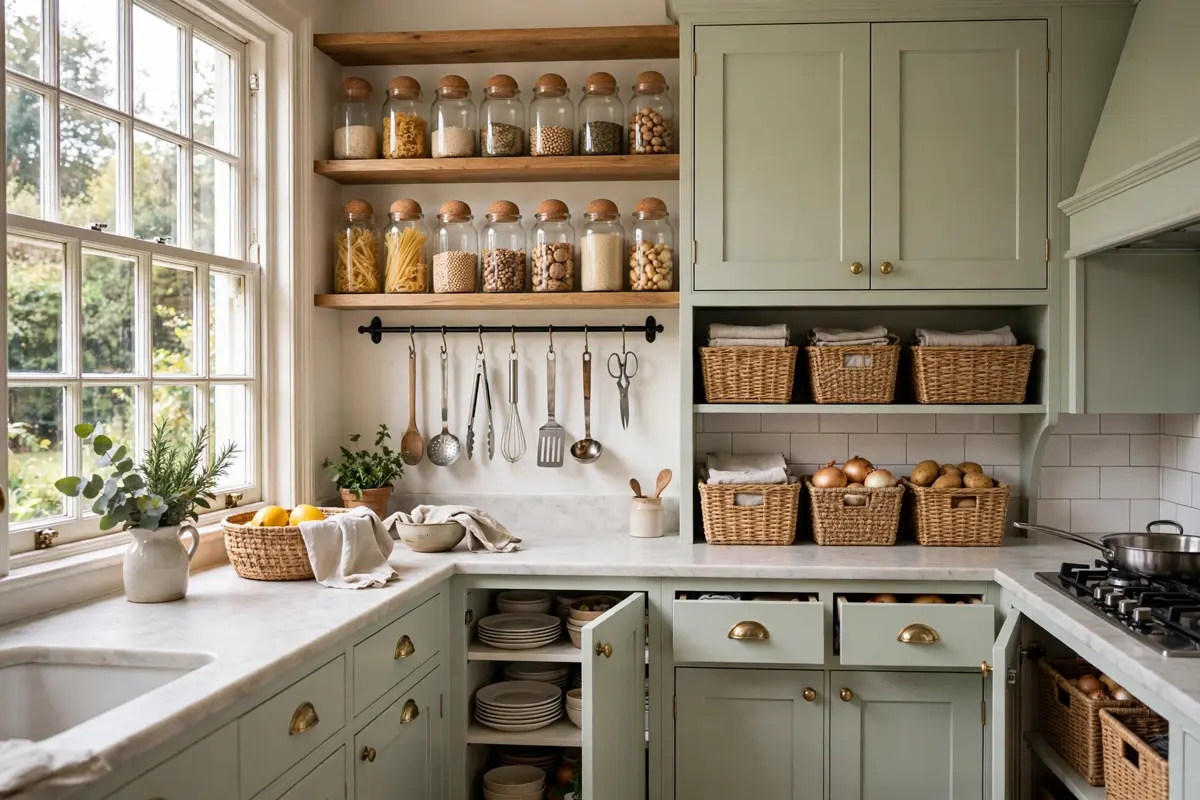
A small kitchen does not have to mean a chaotic one. The difference between a cramped kitchen that frustrates you daily and a compact one that works beautifully is rarely floor space — it is how well the space you have is organised. These small kitchen storage ideas focus on the walls, doors, corners and gaps that most kitchens waste, so you can clear your worktops, find things first time and enjoy cooking in the room again. None of them needs a renovation, and most can be done in a weekend with basic tools.
Start by clearing the worktop
Worktop space is the most precious surface in a small kitchen, so the first of our small kitchen storage ideas is a simple audit: everything sitting on the counter should earn its place. Appliances you use weekly rather than daily can live in a cupboard. Knife blocks, utensil crocks and spice racks all have slimmer wall-mounted alternatives. As you reorganise, think of the room the way you would approach home decor accessories elsewhere in the house — every item should be either useful, beautiful, or ideally both, and anything that is neither needs a new home.
Use the walls: rails, shelves and hooks
Walls are the most underused storage in most kitchens. A simple rail with S-hooks keeps utensils, mugs and even small pans within reach without touching a drawer. Open shelves work brilliantly for everyday glasses and bowls, and they make a small room feel lighter than wall cabinets do. Keep the prettiest, most-used items on open shelves and hide the clutter behind doors.
A magnetic strip for knives frees up a whole drawer. Hooks under wall cabinets hold mugs and free cupboard space for bulkier items. Even the narrow strip of wall between the worktop and the cabinets can carry a slim shelf for oils and spices you reach for constantly. If you enjoy this kind of vertical thinking, the same approach transforms a bathroom’s storage too, where space is just as tight.
Make cupboards work twice as hard
Most kitchen cupboards waste the top half of their height. Shelf risers — the small stepped stands that sit inside a cupboard — instantly double the usable layer for tins, jars and mugs. Stackable baskets group baking supplies or cleaning products so you can pull the whole category out at once instead of rummaging.
Inside cupboard doors is another forgotten surface: slim racks hold cling film, foil, bin bags and spice jars neatly. A turntable in a deep corner cupboard ends the archaeological dig for the tin at the back. And if your pans nest badly, a vertical file-style rack stores lids and chopping boards upright, taking a fraction of the space of a teetering stack.
Doors, ends and awkward gaps
Over-door racks turn the back of a kitchen or pantry door into storage for packets, wraps and cleaning supplies. The gap beside the fridge, often only a few inches wide, can take a slim pull-out trolley for bottles and jars. The end panel of a run of cabinets can hold hooks for aprons, tea towels and shopping bags.
Do not overlook the space above wall cabinets either: baskets up there hold the slow cooker, the fondue set and other rarely used kit, keeping it accessible but out of the daily flow. In open-plan homes these tricks pair well with considered dining room decor, because a tidy kitchen makes the whole shared space feel calmer.
Choose furniture and containers that earn their keep
In a compact kitchen, every purchase should be interrogated. Decant dry goods into uniform stackable containers: they use the full height of a shelf, keep food fresher and let you see at a glance what is running low. A folding step stool gives you safe access to high shelves and tucks away flat. If you have room for a small trolley or butcher’s block on wheels, it can serve as extra worktop, storage and a movable island in one — the same multi-tasking logic behind good furniture choices for small homes.
Finally, keep one drawer honest. Every kitchen accumulates odd cables, batteries and takeaway menus; giving that clutter a single defined drawer stops it spreading across the room. Soft touches matter as well — a clear worktop with a plant, a bowl of fruit and coordinated textiles, much like the effect well-chosen cushions have in a living room, makes a small kitchen feel designed rather than squeezed.
Storage that works for renters and small budgets
Not everyone can drill into walls or replace cabinets, and small kitchens are often rented ones. Tension rods inside a cupboard create a second tier for glasses without a single screw. Over-door hooks, suction racks and freestanding shelf units all add storage that leaves with you when you move. A simple wooden crate turned on its side becomes a shelf; a cutlery tray stood upright in a cupboard organises packets and pouches better than any box.
Budget should never be a barrier: almost everything in this guide — risers, baskets, hooks, rails — is inexpensive, and the biggest gains come from rethinking space rather than buying furniture. Measure before you buy anything, though. In a small kitchen, a container that is two centimetres too wide is not storage; it is clutter with good intentions.
Keeping it working: the five-minute reset
Storage systems fail when they are complicated. The test of every idea here is whether putting something away is easier than leaving it out — because if it is not, it will end up on the worktop by Thursday. Once a week, give the kitchen a five-minute reset: returns strays to their homes, wipe the cleared worktop, and check one cupboard for anything creeping in that does not belong. That tiny habit protects all the work you have done and keeps the room feeling like the calmest version of itself.
A weekend plan for a calmer kitchen
You do not need to do everything at once. On Saturday, empty one cupboard at a time, discard what is out of date or unused, and add risers or baskets as you refill it. On Sunday, fit the rail, hooks and door racks, then decant your dry goods. By Monday morning the kitchen will feel noticeably bigger — same walls, same footprint, but every inch finally working for you. Small kitchens reward this kind of attention more than any other room in the house, because in a compact space, good storage is not a luxury; it is what makes the room a pleasure to cook in.