
Strong auto repair services landing pages do more than describe what a garage can fix. They need to match the searcher’s intent, communicate local relevance, answer practical questions and make it easy for potential customers to take the next step. For UK garages and automotive businesses, a well-structured service page can become an important part of both local SEO and customer acquisition.
Drivers searching for repairs are often looking for a solution to a specific problem. They may need brake repairs, diagnostics, suspension work, exhaust repairs or assistance with another vehicle fault. Because the intent can be highly commercial, dedicated service pages can be more effective than trying to place every automotive service on one generic page.
Why Auto Repair Services Need Dedicated Landing Pages
A garage may offer dozens of services, but customers do not necessarily search for them in the same way. Someone searching for brake repairs has a different need from someone looking for a general vehicle service. A driver experiencing steering problems may also want information that is completely different from a customer looking for tyre replacement.
Dedicated landing pages allow a business to address these differences clearly. Each page can focus on one service, explain the problem it solves and provide relevant information about the garage.
This approach also supports a broader automotive content structure. A central auto services resource can provide the wider context, while focused repair pages target specific commercial searches.
A useful landing-page structure might include:
- The specific repair or service offered
- Common reasons customers need the service
- Relevant symptoms and warning signs
- What the repair process may involve
- Vehicle types or makes supported where applicable
- Service location and coverage
- Clear enquiry or booking options
- Links to relevant educational resources
Match the Page to Search Intent
Search intent should determine what each landing page contains. A person searching for “brake repair near me” is likely looking for a local provider, whereas someone searching “why are my brakes squeaking” may initially need educational information.
These searches can support one another without requiring the same page to rank for both purposes.
A commercial repair page should focus on the service and the customer’s next step. An informational guide can explain the underlying issue and then link naturally to the relevant repair service when professional assistance may be appropriate.
This separation reduces content overlap and creates a clearer website architecture.
How Auto Repair Services Pages Support Local SEO
Most physical garages depend on customers within a practical travelling distance. That makes local SEO particularly important for repair services.
A landing page should make its geographic relevance clear without creating awkward keyword repetition. Explain where the garage operates, which customers it serves and whether there are specific service areas that genuinely matter to the business.
Location information should be useful rather than decorative. A page targeting a particular area should provide genuine information about serving that location rather than simply inserting a town name into identical paragraphs.
This principle becomes especially important when a business creates multiple location pages. Each page should have a legitimate purpose and provide information that helps customers in that area.
Write Conversion-Focused Automotive Copy
SEO can bring a visitor to a landing page, but the content still needs to persuade that visitor to take action. Automotive copywriting should therefore combine useful information with clear conversion pathways.
Start by explaining the service in straightforward language. Tell readers what the repair addresses and why they may need professional assistance. Avoid excessive technical jargon unless it genuinely helps explain the service.
The page should then make the next step obvious. Depending on the business, this could involve requesting a quote, calling the garage, making an appointment or submitting a booking enquiry.
Important information should be easy to find, particularly for mobile users. Drivers may search for repair services while dealing with an immediate vehicle problem, so they should not have to navigate through several pages before finding contact information.
Use Keyword Targeting Without Keyword Stuffing
Keyword targeting helps search engines understand the purpose of a page, but repeating the exact phrase excessively can make the content unnatural.
A page focused on auto repair services can naturally discuss related terms such as vehicle repairs, car repairs, automotive repairs, repair garage, vehicle diagnostics and mechanical repairs when those concepts genuinely apply.
The exact terminology should reflect the actual service. A brake repair page should not attempt to rank for every automotive repair phrase if doing so makes the page less relevant.
Strong keyword targeting is ultimately about matching the right page with the right search intent rather than forcing every related term into one document.
Explain What the Repair Service Covers
Customers often hesitate to contact a garage because they do not know exactly what a particular repair service involves. A useful landing page can remove some of that uncertainty.
Describe Common Symptoms
Explain the signs that may lead a customer to seek the service. For example, depending on the repair, symptoms could include unusual noises, warning lights, vibration, changes in handling or reduced vehicle performance.
Avoid suggesting that one symptom always means one specific fault. Several mechanical problems can produce similar signs, and proper diagnosis may be necessary.
Explain the Diagnostic Process
Where diagnosis forms part of the service, explain why technicians may need to inspect or test the vehicle before recommending repairs. This sets realistic expectations and helps customers understand why a professional assessment may be necessary.
Set Clear Expectations
Explain what customers should bring, whether appointments are required and what happens after the initial assessment. Clear information can reduce uncertainty and improve the overall customer experience.
Connect Repair Pages With Vehicle Maintenance Content
Repair content becomes more useful when it connects naturally with educational resources. Drivers researching a repair may also need broader information about maintaining their vehicle.
For example, the vehicle maintenance guide can provide broader information about preventive care and routine checks. A repair page can link to it when discussing how regular maintenance may help motorists identify problems earlier.
Similarly, a vehicle inspection resource can be relevant when discussing used-car condition, pre-purchase assessments or identifying potential problems before ownership.
These contextual connections help visitors explore related subjects without turning the repair page into a collection of unrelated links.
Build Supporting Content Around Repair Services
A service landing page should usually be supported by useful content rather than expected to answer every question itself. This creates opportunities to build a content cluster around important repair topics.
For example, a garage specialising in wheel-related repairs could create supporting resources about tyre wear, steering symptoms and alignment. The main service page remains focused on the commercial offering, while the supporting articles answer narrower informational questions.
The existing wheel alignment resource is an example of how a specialist automotive topic can be treated as its own search subject rather than being buried within a generic repair page.
This structure creates a logical relationship between commercial and informational content. Users receive detailed answers when they need them, while search engines can understand how individual pages relate to the broader automotive subject.
Make Service Pages Technically Easy to Understand
Good landing-page SEO also depends on clear page structure. Use one descriptive H1, logical H2 sections and concise paragraphs that make the content easy to scan.
The title should communicate the service clearly, while the introduction should immediately confirm that the page addresses the visitor’s need.
Important service information should not be hidden inside large blocks of text. Lists can be useful for explaining service features, common symptoms or booking requirements where appropriate.
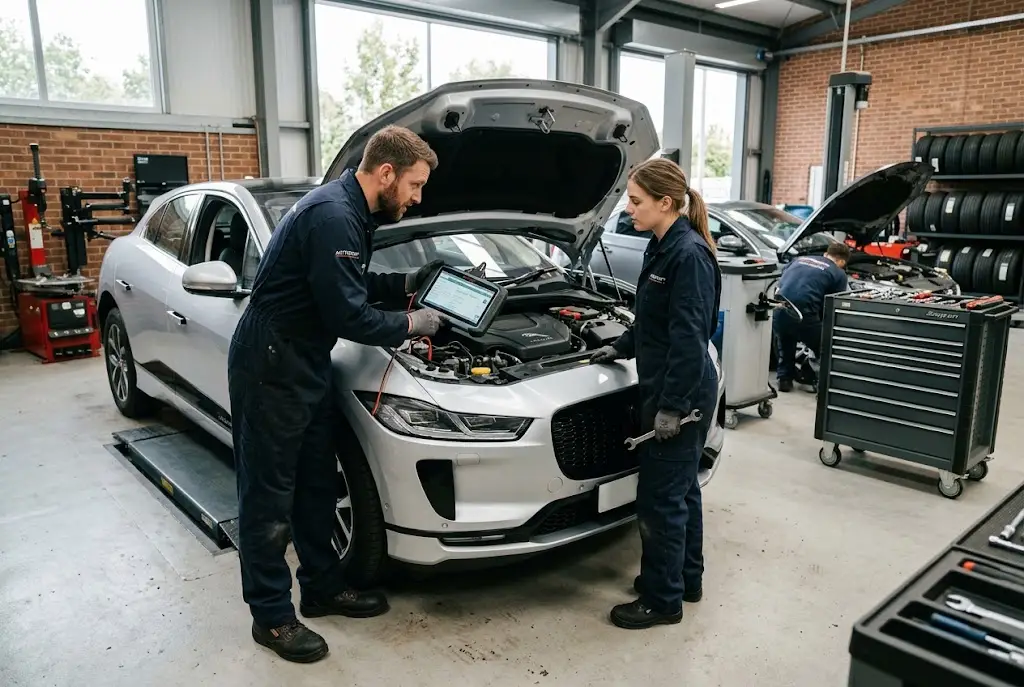
Images can also support the page when they provide genuine context. For example, a professional photograph of technicians working on a vehicle can reinforce the service environment. Image filenames and alt text should describe the actual image rather than being overloaded with keywords.
Use Internal Links to Guide the Customer Journey
Internal linking should help visitors move from one relevant question to another. A repair landing page can link to maintenance content, inspection guides or specialist automotive services when those resources genuinely support the subject.
The wider site can then link back to the repair page from relevant educational articles. This creates a two-way relationship between informational and commercial content.
For example, an article explaining maintenance warning signs can direct a reader towards a relevant repair service. A repair page can then link back to maintenance guidance for customers who want to understand preventive care.
Descriptive anchor text is preferable to generic phrases such as “learn more”. It gives readers a clearer indication of what they will find after following the link.
Location Pages Need More Than a Town Name
Location pages can be useful for automotive businesses serving multiple areas, but they should not become duplicate templates with only the location changed.
A useful location page can explain the actual services available in that area, how customers can reach the business, which surrounding communities are served and what makes the service relevant locally.
If a garage genuinely operates across several locations, a structured location strategy can help users discover the closest appropriate service. However, businesses should avoid creating pages for places they do not actually serve simply because those keywords appear attractive.
Build Trust Into Auto Repair Services Pages
Repair decisions can involve safety and significant expense, so trust is particularly important. A landing page should accurately describe the business’s capabilities and avoid exaggerated promises.
Where relevant, explain technician expertise, diagnostic capabilities, types of vehicles supported and the scope of the service. If a repair requires specialist equipment or expertise, say so rather than making broad claims.
Customer reviews and testimonials can also support conversion when they are genuine and presented appropriately. However, they should complement useful service information rather than replace it.
Common Landing Page Mistakes to Avoid
One Page for Every Repair
Combining brakes, tyres, diagnostics, suspension and every other service on one page can make it difficult to target specific commercial searches. Important services often deserve their own focused pages.
Thin Content
A page containing little more than a service name and a phone number may not answer the questions potential customers have before contacting a garage.
Duplicate Location Pages
Near-identical pages created for dozens of towns can provide little additional value. Location content should reflect genuine service coverage and local relevance.
Overpromising Results
Automotive repairs depend on the vehicle’s condition and diagnostic findings. Avoid guaranteeing outcomes or costs that cannot reasonably be confirmed before assessment.
Forcing Keywords Into Every Paragraph
Natural language is more persuasive and easier to read. Use related terminology where appropriate and let the page’s overall context communicate its subject.
Support Repair Landing Pages With Link-Worthy Content
Useful educational resources can also contribute to a broader link-building strategy. Automotive businesses can create maintenance checklists, repair explainers and practical guides that other relevant websites may want to reference.
For example, a detailed guide explaining common vehicle warning signs can serve motorists while also providing a useful resource for automotive publishers or local websites.
This approach connects service-page SEO with broader content marketing and outreach. Instead of trying to acquire links directly to every commercial landing page, a business can develop valuable resources that attract attention and then use internal links to strengthen the wider site structure.
Measure Landing Pages by Commercial Performance
Ranking for a keyword is useful, but it should not be the only performance indicator. Automotive businesses should also consider whether landing pages generate meaningful enquiries and customer actions.
Useful metrics can include organic impressions, clicks, enquiries, calls, booking requests and engagement with supporting content. Compare performance between different services to identify which pages attract the most commercially relevant visitors.
If a page receives organic traffic but few enquiries, review the service explanation, trust information, mobile experience and calls to action. Sometimes the problem is not visibility but conversion.
How to Build a Strong Auto Repair Services Cluster
A practical strategy starts with the most commercially important repair services. Create focused landing pages for those services and make sure each page has a distinct purpose.
Next, identify the questions customers ask before booking. Turn those questions into supporting educational content and connect the articles to relevant service pages through contextual internal links.
Then develop local relevance where appropriate. Make sure service areas are genuine and that location pages provide useful information instead of duplicated copy.
Finally, strengthen the content ecosystem through maintenance resources, specialist automotive guides, digital PR and relevant outreach. As the website grows, regularly review internal links so older pages remain connected to newer resources.
Final Thoughts
Effective auto repair services landing pages combine search optimisation with practical customer information. They should target a clear service intent, explain what the business provides, demonstrate genuine local relevance and make the next step straightforward.
The strongest approach is not to create pages simply to capture keywords. Instead, build a logical service architecture supported by useful educational content, relevant internal links and trustworthy information.
When service pages, location content and supporting guides work together, an automotive website can create a stronger foundation for local SEO and long-term topical authority. More importantly, visitors can find the information they need quickly and move naturally from researching a vehicle problem to finding an appropriate professional service.