
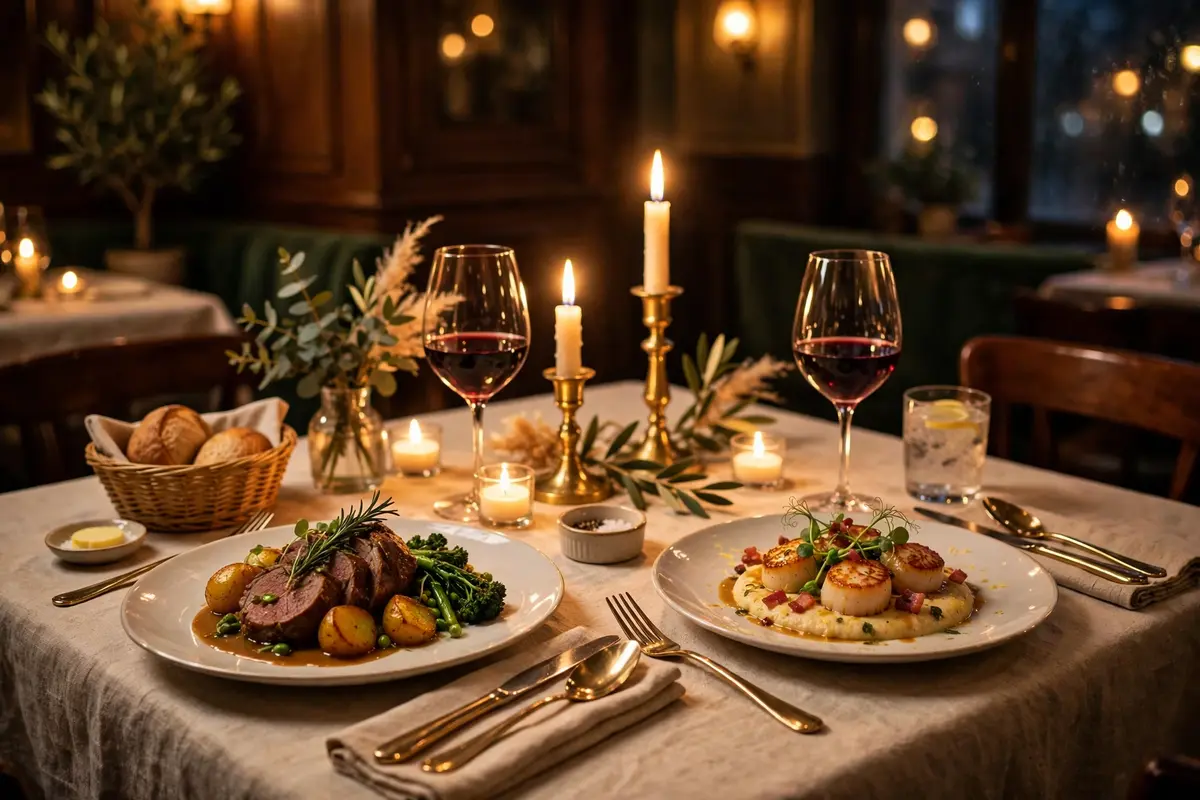
Knowing how to choose a restaurant for a special occasion takes the stress out of a birthday, anniversary, or family celebration. The right choice is not always the most expensive place in town. It is the one that fits your guests, your budget, and the mood of the evening. This guide covers each decision in order, so you can book with confidence.
Start With the Occasion, Not the Menu
Every celebration has its own shape. A milestone birthday with 12 guests needs space and a lively atmosphere, while a quiet anniversary dinner for two calls for somewhere calm and intimate. Decide first who is coming, how formal the evening should feel, and how long you want the meal to last.
Think about your guests as people, not just numbers. Older relatives may need step-free access and a quieter corner, while children need a menu they will actually eat from and room to sit comfortably. A restaurant that suits a group of friends on a Friday night can be a poor fit for a family gathering with grandparents.
It helps to write down three must-haves before you start searching. For example: a private corner for 10 people, at least two vegetarian mains, and a bill under a set amount per person. With those fixed, you can judge every option quickly instead of scrolling endlessly. If the celebration involves a trip away, our guide to UK city breaks will help you plan the weekend around the meal.
Set a Realistic Budget First
Work out what you can spend per person before you fall in love with a menu. Include drinks, service, and the taxi home, not just the food. A restaurant that looks affordable on the menu can surprise you once the bill arrives, so check whether service is added automatically and how much a typical three course meal costs.
Set menus are worth a look for celebrations. Many UK restaurants offer a set menu for groups, which fixes the price and speeds up ordering. Ask whether the set menu covers dietary needs, and whether you can swap a course for a guest who cannot eat something on it.
If the budget is tight, consider lunch instead of dinner. Many good restaurants serve the same kitchen at lower prices in the middle of the day, and a long lunch can feel just as special as an evening out. Booking on a weekday rather than a Saturday can also bring the price down.
Read Reviews the Smart Way
Reviews help, but only if you read them with care. Look for recent comments about the food and service, and pay attention to what people say about the dishes you would actually order. A restaurant can have a high average score while serving a disappointing vegetarian menu, so read the detail that matches your group.
Watch for patterns rather than single complaints. One unhappy review about a slow evening might be bad luck, but five reviews mentioning cold food or rude staff point to a real problem. Photos from recent diners are often more honest than the restaurant’s own pictures, so check those too.
Ask people you trust as well. A friend who ate somewhere last month can tell you things no review will, such as whether the room gets noisy after eight, or whether the portions suit a hungry teenager. Local knowledge beats a star rating every time.
Check the Menu for Your Whole Party
Before you book, read the full menu online and check it against your guests. Look for allergies and dietary needs first, then for fussy eaters and children. A good restaurant will list allergens clearly and offer sensible swaps, and the best ones will answer a quick phone call about a specific ingredient without fuss.
Do not forget drinks. If some of your party do not drink alcohol, check that the restaurant offers more than a single soft drink. A good alcohol-free list shows that the kitchen takes all its guests seriously. The same goes for desserts: a celebration usually ends with something sweet, so make sure there is a choice worth ordering.
If someone in your party has a serious allergy, call the restaurant before booking and ask how they handle it. A confident, specific answer is a good sign. A vague one means you should look elsewhere, because getting the food right matters far more than a pretty dining room, and our guide to dining room decor ideas shows what a well set table looks like.
Check Hygiene and Practical Details
A restaurant’s food hygiene rating is public in the UK, and it is worth a quick check before you book. Ratings are published by the Food Standards Agency, and you can look up any restaurant’s score on the Food Hygiene Rating Scheme website in under a minute. A top score is reassuring, while a low one is a reason to choose somewhere else.
Practical details matter too. Is there parking nearby, or a bus stop within easy walking distance? Is the entrance step-free? Does the restaurant take card payments, and do they split the bill? These small questions save awkward moments on the night, and our guide to home decor accessories covers the same kind of planning if you host at home instead.
If the evening includes a cake, ask whether you can bring your own and whether there is a charge for cutting and serving it. Some restaurants welcome it, some charge a small fee, and a few refuse outright, so settle this before the day.
Book Early and Confirm the Details
Popular restaurants fill up fast at weekends, especially in December and around Valentine’s Day. Book as early as you can, and ask for the table you want rather than accepting whatever is left. A window table, a corner booth, or a quiet spot away from the kitchen can change the whole evening.
When you book, confirm the details in writing: the date, time, number of guests, any dietary needs, and the price of the set menu if you chose one. Ask about the cancellation policy as well, in case plans change. A short email confirmation protects both sides and avoids confusion on the night. If you are travelling for the occasion, travel insurance is worth sorting before you go.
For larger groups, ask whether the restaurant needs a deposit or a pre-order. Many places ask groups of eight or more to choose their mains in advance, which speeds up service and avoids the long wait while everyone decides. Send the pre-order early so the kitchen has time to prepare.
What to Do If Something Goes Wrong
Even good restaurants have off nights, so it helps to know how to handle problems calmly. If the food arrives cold or a dish is wrong, tell the waiter politely and straight away. Most restaurants will fix the problem quickly, and a calm complaint gets a better result than a loud one.
If the service is slow, ask for a realistic wait time rather than sitting in silence. If the evening is a real disappointment, speak to the manager before you leave and give them a chance to put it right. A refund or a complimentary course is common when a restaurant knows it has fallen short.
Afterwards, leave an honest review. Mention what was good as well as what went wrong, because future diners rely on balanced accounts. And if the evening was a success, tell the restaurant too: a kind word costs nothing and a good review helps a small business far more than people realise.
Making the Night One to Remember
The best restaurant for a special occasion is the one where your guests relax, eat well, and leave talking about the evening rather than the bill. Pick the place that fits your people and your budget, book early, and confirm the details. Then you can stop worrying about the venue and enjoy the celebration itself. If you decide to celebrate at home instead, candle holders and soft lighting can turn an ordinary table into a celebration setting, and our beauty product buying guides can help you pick the right products for the evening.
Start with your must-haves, check the menu and the hygiene rating, and trust your judgement when you visit the restaurant’s website. When those pieces line up, you have found your place, and the only decision left is what to order first.