
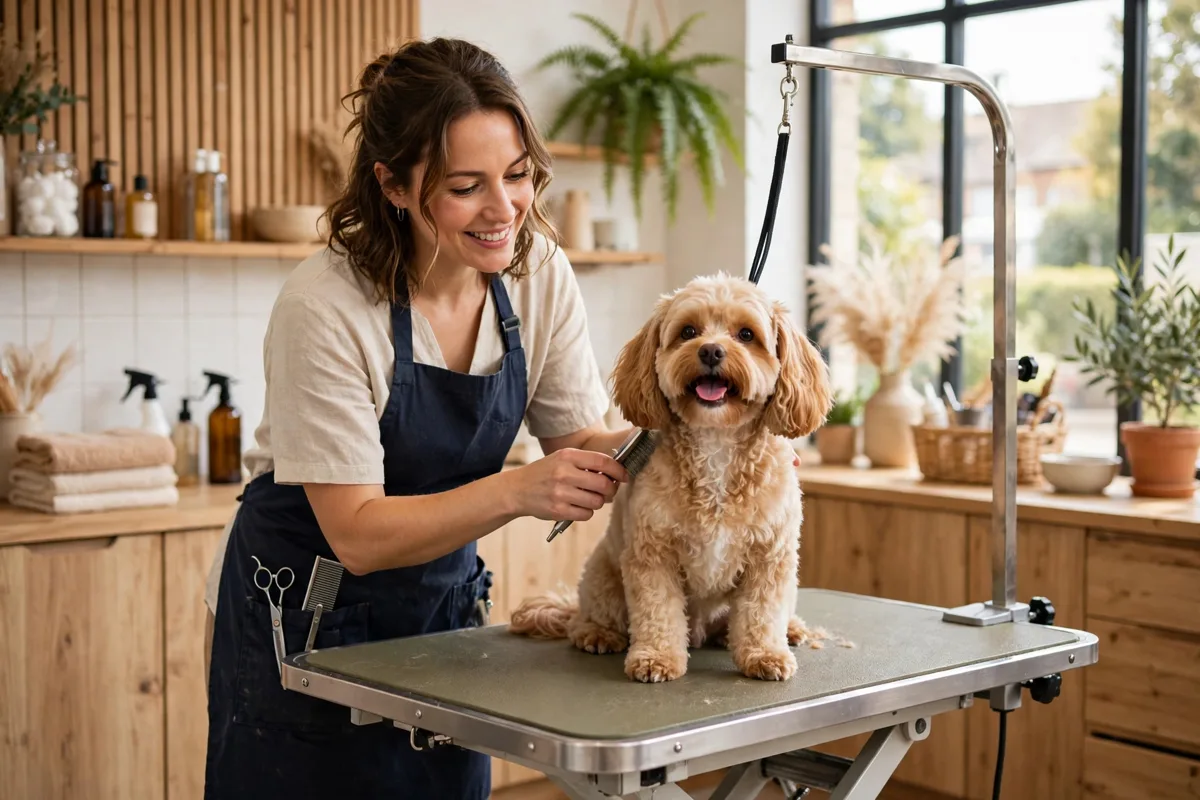
Learning how to choose a dog groomer matters more than most owners realise. A good groomer keeps your dog calm, spots skin and ear problems early, and sends home a pet who is happy to go back. A poor one can leave a nervous dog dreading every appointment for years.
The tricky part is that grooming salons all look similar from the outside. The difference shows in the handling, the questions they ask you, and how your dog behaves afterwards. This guide walks through the checks that actually separate a careful groomer from a careless one.
What a Good Groom Should Include
A standard groom is more than a bath and a haircut. Most salons include a wash with a coat-appropriate shampoo, a blow dry, a brush-out, and a cut or de-shedding treatment matched to the breed. Nails, ears and paw pads are usually checked as part of the session.
For double-coated breeds, the brush-out is the part that matters most. A groomer who rushes it leaves compacted undercoat behind, and that leads to matting and hot spots within weeks. Ask any groomer how long a session takes for your breed. A spaniel groom finished in forty minutes is a warning sign, not a bargain.
Between appointments, your own routine plays a part too. A quick weekly brush at home, perhaps in the bathroom where the hair is easy to sweep up, keeps the coat manageable. Our guide to bathroom accessories has ideas for storage that keeps grooming kit tidy and within reach.
How to Choose a Dog Groomer: Seven Checks That Matter
One, look for recognised training. Many UK groomers hold a City and Guilds qualification or an iPET Network diploma. Membership of a professional body such as the Pet Industry Federation is another good sign, because members agree to a code of practice.
Two, visit before you book. A well-run salon smells clean, sounds calm, and lets you see where dogs are washed and dried. If staff refuse a quick look around, choose somewhere else.
Three, ask how dogs are dried. Cage dryers that blow hot air into a closed crate are a known risk for brachycephalic breeds such as pugs and French bulldogs. Hand drying or a cool-air cabinet is safer, and a good groomer will explain their method without hesitation.
Four, check how many dogs are booked at once. A groomer working one-to-one can watch your dog the whole time. A salon running six dogs per groomer cannot, however friendly the team seems.
Five, ask about nervous and elderly dogs. Experienced groomers offer short trial visits, breaks during the groom, and quieter appointment slots. That flexibility tells you they read dogs well.
Six, read reviews with care. Look for comments about handling and communication, not just the haircut. Owners of much-loved dogs tend to write in detail when a groomer has earned their trust, and those reviews are worth more than a row of five stars with no words.
Seven, confirm what happens if something goes wrong. Ask whether they carry insurance and which vet they would use in an emergency. A professional answer here is a strong sign of a professional business.
Questions to Ask Before the First Appointment
A short conversation before booking tells you a great deal. Ask what products they use, especially if your dog has sensitive skin. Ask whether they will hand-strip a wire coat rather than clip it, if that applies to your breed. Ask how they handle matting, because shaving out severe mats is sometimes the kindest option and a good groomer will discuss it rather than just do it.
Also ask what information they need from you. A careful groomer asks about vaccinations, flea treatment, health conditions and past grooming experiences. If nobody asks anything at all, your dog is being treated as a number.
Red Flags That Mean Walk Away
Some warning signs should end the conversation. Sedation without a vet involved is never acceptable. Neither is a salon that will not tell you who will actually groom your dog. Prices far below every competitor usually mean corners are cut on time, products or staffing.
Watch your dog afterwards as well. Occasional tiredness after a groom is normal. Trembling at the door on the second visit, unexplained nicks, or a dog who suddenly hates being brushed are all reasons to change groomer and say why.
What a Groom Costs in the UK
Prices vary by region, breed and coat condition. As a rough guide, a small short-coated dog might cost £30 to £45 for a full groom, a medium doodle-type coat £50 to £70, and a large double-coated breed £60 to £90. Matted coats and hand-stripping add to the bill, and most salons charge honestly for the extra time.
If you are planning a trip and wondering whether to groom before or after, most owners book a tidy-up before travelling and a full groom on return. Our UK city breaks guide is handy if you are taking your dog along, and it is worth checking what your travel insurance says about pets before you go.
A Real Example: The Doodle Who Hated Grooming
Consider a cockapoo owner whose dog came home from his first two grooms shaking and refused to get in the car for weeks. The salon was cheap and fast, and it turned out each groomer handled eight dogs a day with heated cage drying. The owner switched to a one-to-one groomer who charged £15 more, booked the dog into the quiet first slot of the day, and built up from a short bath-only visit.
Three appointments later the same dog walked in with his tail up. Nothing about the haircut changed. Everything about the handling did, and that is the part of grooming your dog actually remembers.
It also helps to ask how the salon handles the end of the appointment. Dogs should be collected promptly rather than left waiting in a crate for hours, and a groomer who sends a quick photo or message when your dog is ready makes the whole routine calmer for everyone involved, especially on the first few visits.
Making the First Booking Count
Start with a shortlist of two or three salons, visit each one, and ask the questions above. Book a bath and tidy first rather than a full groom, watch how your dog comes home, and only then commit to a regular schedule. Owners who treat the first appointment as a trial rarely end up with a dog who fears the grooming table.
At home, small routines support the work your groomer does. Regular brushing, a calm corner for drying off after wet walks, and sensible storage for leads and towels all help. Our home furniture ideas piece includes practical touches for pet-friendly rooms. Choose the groomer your dog would choose, and the smart haircut tends to follow.