
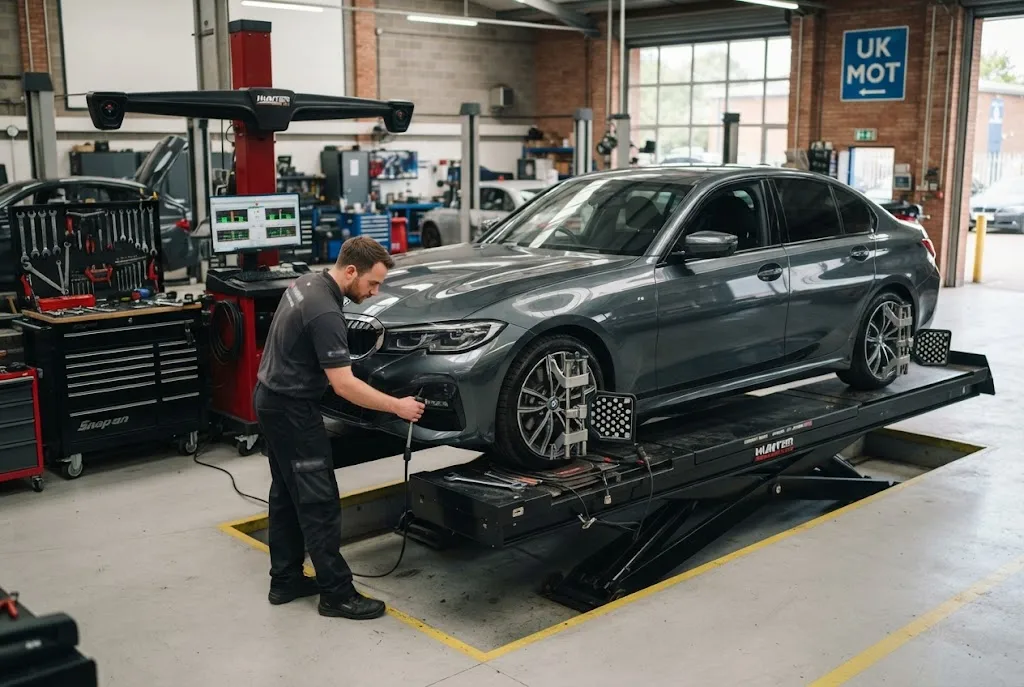
Wheel alignment is both an important automotive service and a valuable commercial search topic for garages and automotive businesses. Drivers may search for wheel alignment when they notice uneven tyre wear, a vehicle pulling to one side or a steering wheel that no longer feels centred. For businesses, that creates an opportunity to build a dedicated service page supported by useful content around wheel balancing, wheel tracking, steering alignment and tyre care.
A strong SEO approach should not treat wheel alignment as an isolated keyword. Instead, it should connect the main service with related customer questions, relevant supporting articles and genuine local search intent. This creates a clearer content structure while helping visitors find the information and services they need.
Why Wheel Alignment Matters for Automotive SEO
Wheel alignment has clear commercial intent because a person searching for the service may already be looking for a garage that can inspect or correct their vehicle. However, not every searcher uses the same terminology.
Some motorists may search for wheel tracking, while others may describe a problem such as uneven tyre wear or a vehicle pulling to one side. A content strategy that understands these different ways of searching can create more useful pages without producing unnecessary keyword variations.
This is where keyword mapping becomes important. Instead of creating separate pages for every phrase, an automotive website can determine which terms belong to the same search intent and which represent genuinely different needs.
Wheel Alignment and Wheel Tracking: Understanding Search Intent
Wheel alignment and wheel tracking are closely related terms in automotive searches, but businesses should still consider how their customers use each phrase. A page can explain the terminology clearly while focusing on the actual service being offered.
The same principle applies to steering alignment. A driver may not search for the technical service name at all. They may search because the steering wheel appears off-centre or the car does not seem to travel straight.
These searches reveal an important SEO principle: search intent should guide content structure rather than forcing every related keyword into a separate article.
A useful service page can explain what wheel alignment involves, common signs that alignment may need checking, how the process relates to tyre condition and when professional inspection may be appropriate. Supporting articles can then answer more specific questions where those questions represent distinct search intent.
How Tyre Wear Can Support Wheel Alignment Content
Tyre wear is one of the most useful supporting concepts for a wheel alignment content cluster because motorists may discover an alignment issue while checking their tyres.
The UK’s Highway Code guidance explains that excessive or uneven tyre wear can be caused by problems including wheels being out of alignment. It also advises drivers to address relevant faults as soon as possible. GOV.UK guidance on vehicle maintenance provides authoritative information that can support educational automotive content.
For an automotive website, this creates a natural content relationship. A general guide about tyre wear can explain possible causes and direct readers towards a relevant wheel alignment service. Conversely, a wheel alignment article can help readers understand why unusual tyre wear may deserve further inspection.
This two-way relationship strengthens topical coverage without requiring every possible tyre-related phrase to become a separate commercial page.
Wheel Balancing vs Wheel Alignment
Wheel balancing is another closely related automotive service, but it addresses a different aspect of wheel and tyre performance. Because customers may confuse balancing and alignment, an educational section comparing the two can be useful.
Rather than treating both services as identical, content should explain that they involve different checks and can be associated with different symptoms. A motorist experiencing vibration, uneven wear or handling concerns may not know which service they need before professional assessment.
This distinction is valuable for SEO because it allows a website to address related search intent while maintaining a clear primary topic on each page. A dedicated wheel balancing resource can support the main wheel alignment page without competing directly with it.
Build Service Pages Around Commercial Intent
For an automotive business, the main wheel alignment service page should have a clear commercial purpose. Visitors should quickly understand what the service is, why they might need it, what the business provides and how to make an enquiry or booking.
This approach follows the broader principle of separating informational content from commercial service pages. LinkCircle’s existing auto care services resource highlights the role of dedicated service pages and explains how educational articles can support those commercial destinations.
A strong service page can cover:
- What wheel alignment involves.
- Common signs of alignment problems.
- The relationship between alignment and tyre wear.
- How wheel tracking relates to alignment.
- Why steering behaviour can be a useful warning sign.
- What motorists can expect from an inspection.
- How to contact or book the service.
The page should answer genuine customer questions rather than simply repeating the target keyword.
Use Keyword Mapping to Prevent Cannibalisation
Keyword mapping is particularly useful when an automotive website covers multiple services. Each important keyword should have a clear destination based on its primary search intent.
For example, wheel alignment can be mapped to the core service page, while wheel balancing may receive a separate service resource if the business genuinely provides that service. A broader article about tyre wear could target informational intent and link naturally to both relevant services.
This structure prevents several pages from competing for almost identical searches. It also makes internal linking easier because each page has a defined role within the wider automotive cluster.
The broader automotive SEO strategy guide explains how content clusters, keyword clustering, topical maps and internal linking can work together to create a connected automotive content system.
How Local Rankings Fit Into Wheel Alignment SEO
Wheel alignment is naturally connected to local search because motorists usually want a service provider they can actually visit. That means location relevance should be genuine and useful rather than created simply by inserting town names into otherwise identical pages.
A local service page can include accurate information about the areas served, opening arrangements, available services and how customers can make contact. If a business genuinely serves several nearby areas, dedicated location content may be appropriate when each page provides meaningful local value.
Businesses should avoid producing dozens of near-identical location pages simply to capture local rankings. The goal is to make every page useful to a real customer in that area.
Use Supporting Articles to Strengthen Topical Authority
A wheel alignment service page does not need to answer every automotive question. Supporting articles can provide deeper coverage while creating useful internal links.
Potential supporting subjects include:
- Common causes of uneven tyre wear.
- Wheel balancing explained.
- Wheel tracking explained for UK drivers.
- Signs that steering alignment may need checking.
- How tyre condition affects vehicle handling.
- Routine vehicle maintenance checks.
- Questions to ask before booking an automotive service.
These articles should only be created when they have a distinct purpose. LinkCircle’s vehicle maintenance guide demonstrates how broader maintenance content can connect related subjects such as tyre care, servicing and vehicle checks into a wider topical structure.
Internal links should then connect the resources naturally. An article about uneven tyre wear can link to the wheel alignment service when the reader may need professional assistance. A wheel alignment page can link back to relevant maintenance information where it helps explain the wider issue.
Why Accurate Automotive Content Matters
Automotive content should be especially careful when discussing steering, tyres and roadworthiness. These subjects can involve safety-critical components, so SEO copywriting should never encourage motorists to diagnose complex mechanical faults solely from an article.
The current GOV.UK MOT inspection guidance covers steering components, steering linkage and related defects, while its vehicle maintenance guidance states that excessive or uneven tyre wear may be associated with wheels being out of alignment.
That does not mean every handling problem is caused by wheel alignment. Content should explain possible relationships without presenting a remote diagnosis as certain. This creates a more trustworthy experience and keeps the article focused on useful information.
Measure the Performance of the Wheel Alignment Cluster
SEO performance should be evaluated across the whole content cluster rather than through one keyword alone. Useful indicators can include organic impressions, clicks, enquiries, service-page engagement and visibility for relevant related searches.
For local businesses, it is also useful to consider whether the content is reaching people within the actual service area. A page attracting visitors from locations the business does not serve may generate traffic without producing meaningful commercial value.
The aim is to create a connected pathway: a motorist searches for a symptom or service, discovers useful information, understands the issue more clearly and can then reach the relevant commercial page.
Build Wheel Alignment Content Around Real Customer Needs
Effective wheel alignment SEO is not simply about repeating the phrase “wheel alignment” throughout a page. It requires a clear understanding of how motorists search, what information they need and which service page should satisfy commercial intent.
Wheel tracking, steering alignment, wheel balancing and tyre wear can all contribute to a strong topical structure when they are connected according to genuine relevance. Keyword mapping helps prevent duplication, while supporting articles can answer informational questions and strengthen the relationship between related pages.
For UK automotive businesses, local relevance adds another important layer. A well-structured service page supported by useful educational content can create a stronger route from search discovery to customer enquiry.
Ultimately, the strongest wheel alignment content is content that helps people first. When useful information, clear service pages, logical internal linking and genuine local relevance work together, SEO becomes part of a broader digital system rather than a collection of isolated keywords.